FRP Caged Ladder
A non-conductive fiberglass reinforced plastic ladder with a full-height safety cage — corrosion-proof against acids, alkalis and salts. Light, strong and maintenance-free, the safe vertical access for chemical plants, power stations and water treatment worldwide.
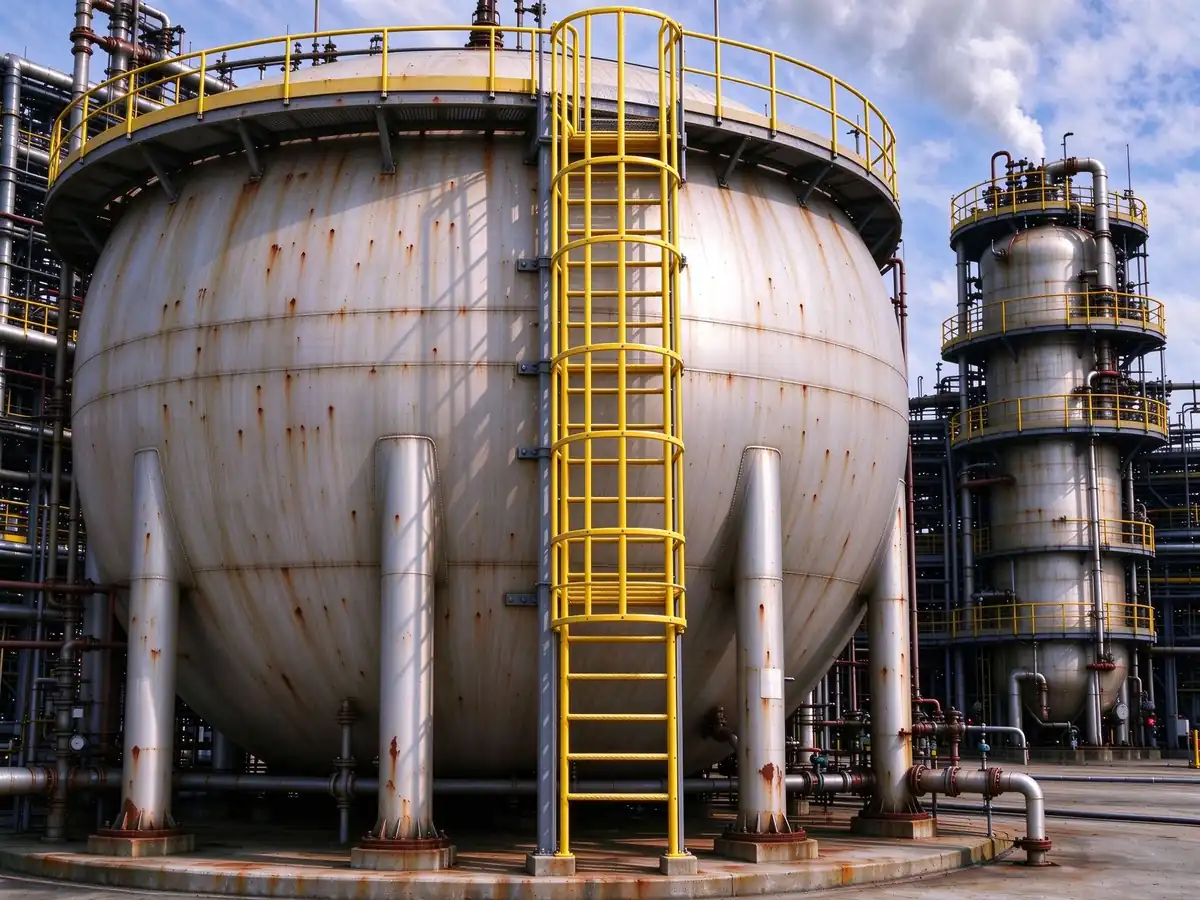
FRP caged ladders are non-conductive fiberglass ladders with a full-height safety cage. Corrosion-proof against acids, alkalis and salts. Light, strong and maintenance-free. Ideal for chemical plants, power stations and water treatment.
What It Is, Why It’s Non-Corrosive, How We Build It, When You Need It
A DengTAI guide to the FRP caged ladder — where it is used, why corrosion-proof and non-conductive matter, how we manufacture it, and when a cage is required.
1What is it?
An industrial vertical-access solution combining a fixed fiberglass reinforced plastic (FRP) ladder with a full-height safety cage of hoops and vertical guards. We build it for corrosive and hazardous environments — chemical plants, electrical & power stations, water treatment and coastal sites — where metal would corrode or conduct electricity.
2Why it matters for your workers
This is the fall-protection safeguard that keeps your people safe on high climbs. With a 650–800mm cage engineered to enclose a worker, 360° protection and vertical guard spacing ≤18", the cage works as a passive restraint: if a worker slips, their body meets the cage wall and a fatal fall is prevented. Fewer accidents, safer operation and less downtime for your project.
3How DengTAI builds it
As an in-house manufacturer we control every stage — pultrusion, cutting, bolted or adhesive assembly, and quality testing. Side rails, slip-resistant rungs at 250–300mm spacing and the cage of hoops and vertical members are fabricated under one roof. Fixed and modular height-adjustable systems are both available.
4When you need it
Whenever a fixed ladder exceeds the cage-free height limit — typically 3–7m depending on the standard — or your site (chemical plants, power stations, water tanks, coastal structures) poses a serious fall, corrosion or electrical risk. We also add intermediate rest platforms on tall climbs.
Why Our FRP Caged Ladder Stands Apart
Every detail is engineered for corrosion resistance, electrical safety and worker protection — delivered as a complete vertical access solution. These are the attributes that set DengTAI FRP caged ladders apart on site.
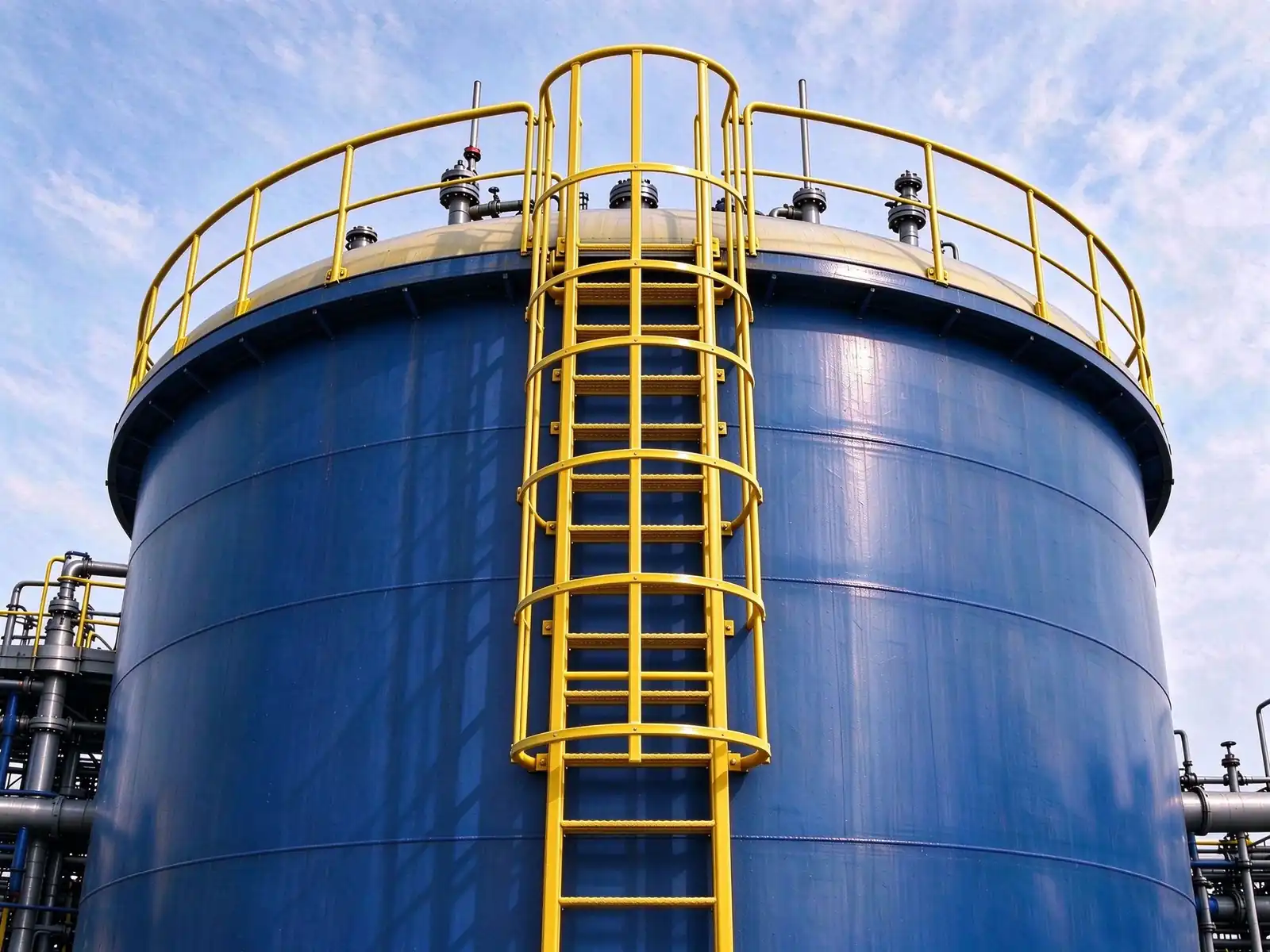
Corrosion-Proof Material
FRP is chemically inert, resisting acids, alkalis, salts and harsh industrial atmospheres that corrode steel. It needs no coating, no painting and no re-treatment — the maintenance-free choice for chemical and water-treatment plants.
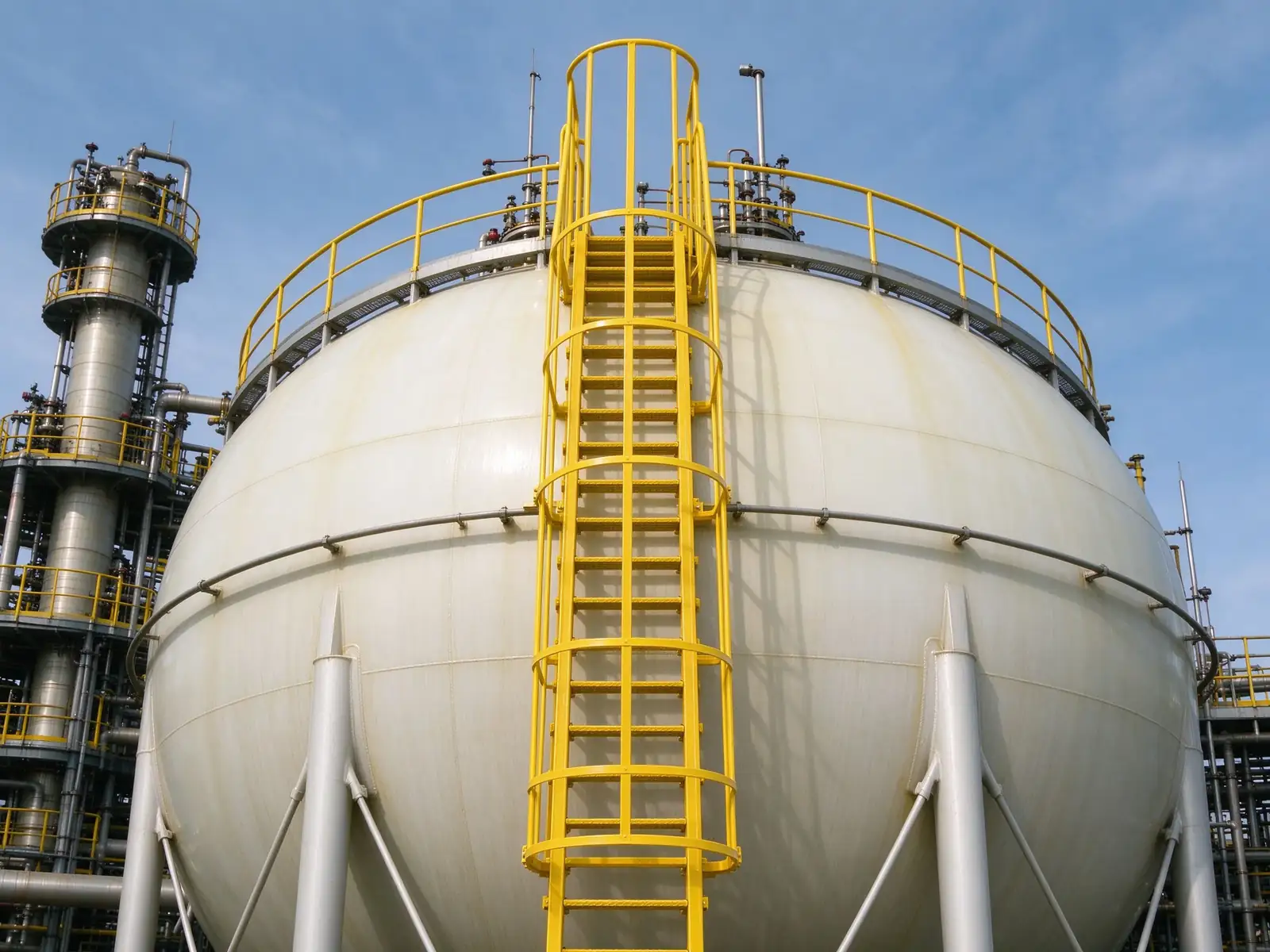
Non-Conductive & Electrically Safe
FRP is a non-conductive insulator, making it the safe choice around live conductors, substations and power stations where metal ladders pose an electrocution risk. Workers climb with confidence in high-voltage areas.
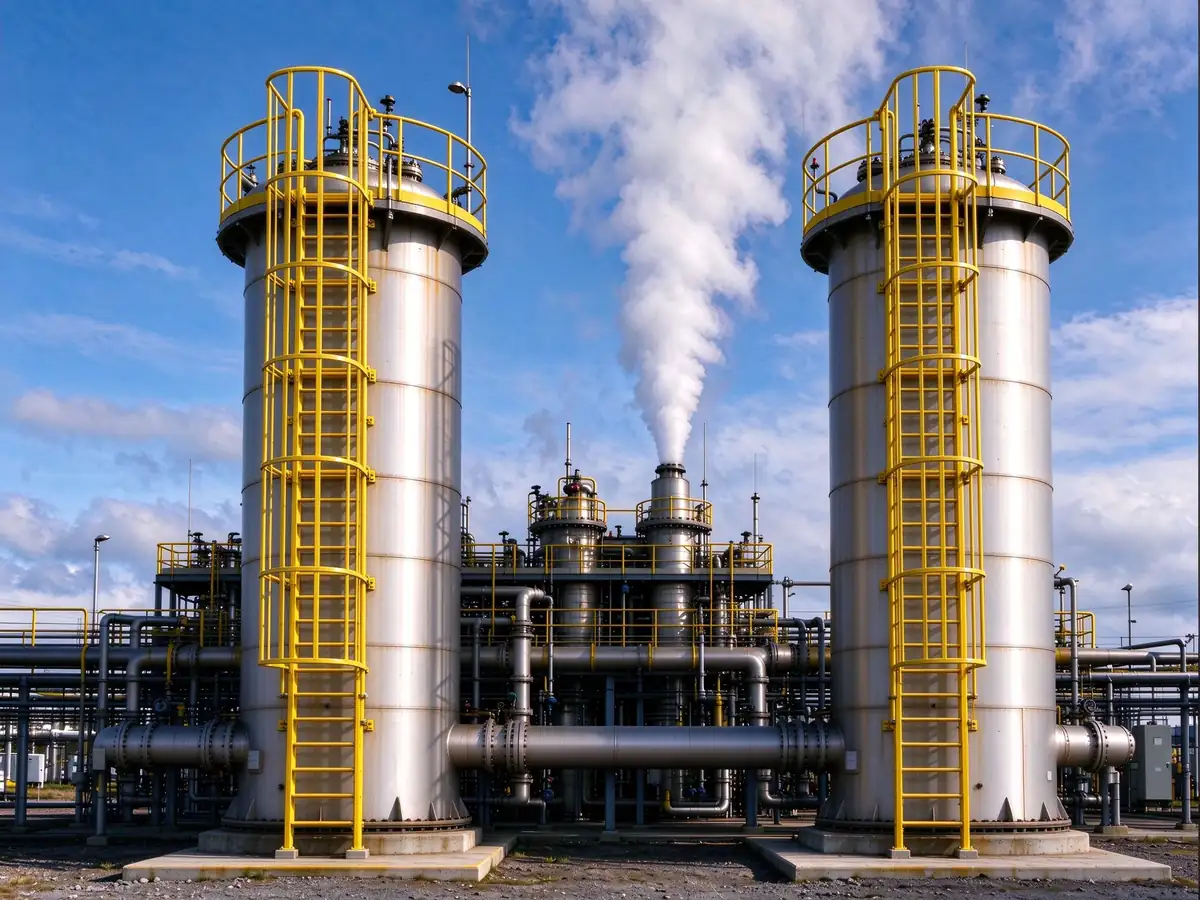
Full-Height Safety Cage
Hoops and vertical guards surround the climber from 2.1–2.4m above ground to 1.1m above the platform, preventing accidental falls. 360° coverage with vertical guard spacing ≤18" (240–300mm) keeps the worker enclosed on every step.
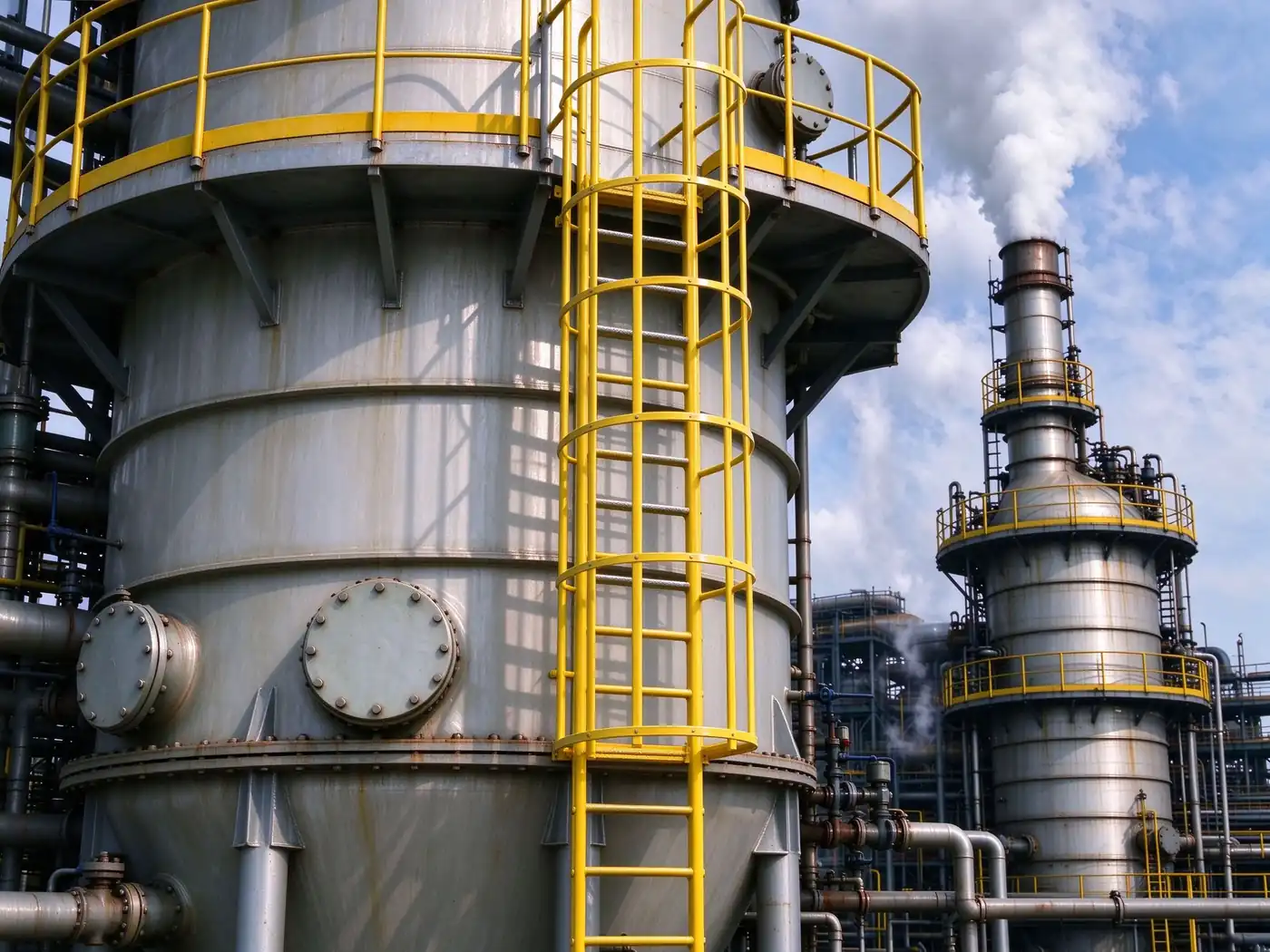
Slip-Resistant Rungs & Even Spacing
FRP rungs with a slip-resistant surface at 250–300mm spacing give a comfortable, steady climb. Consistent rung pitch reduces fatigue on tall climbs and improves worker grip and confidence, even when wet.
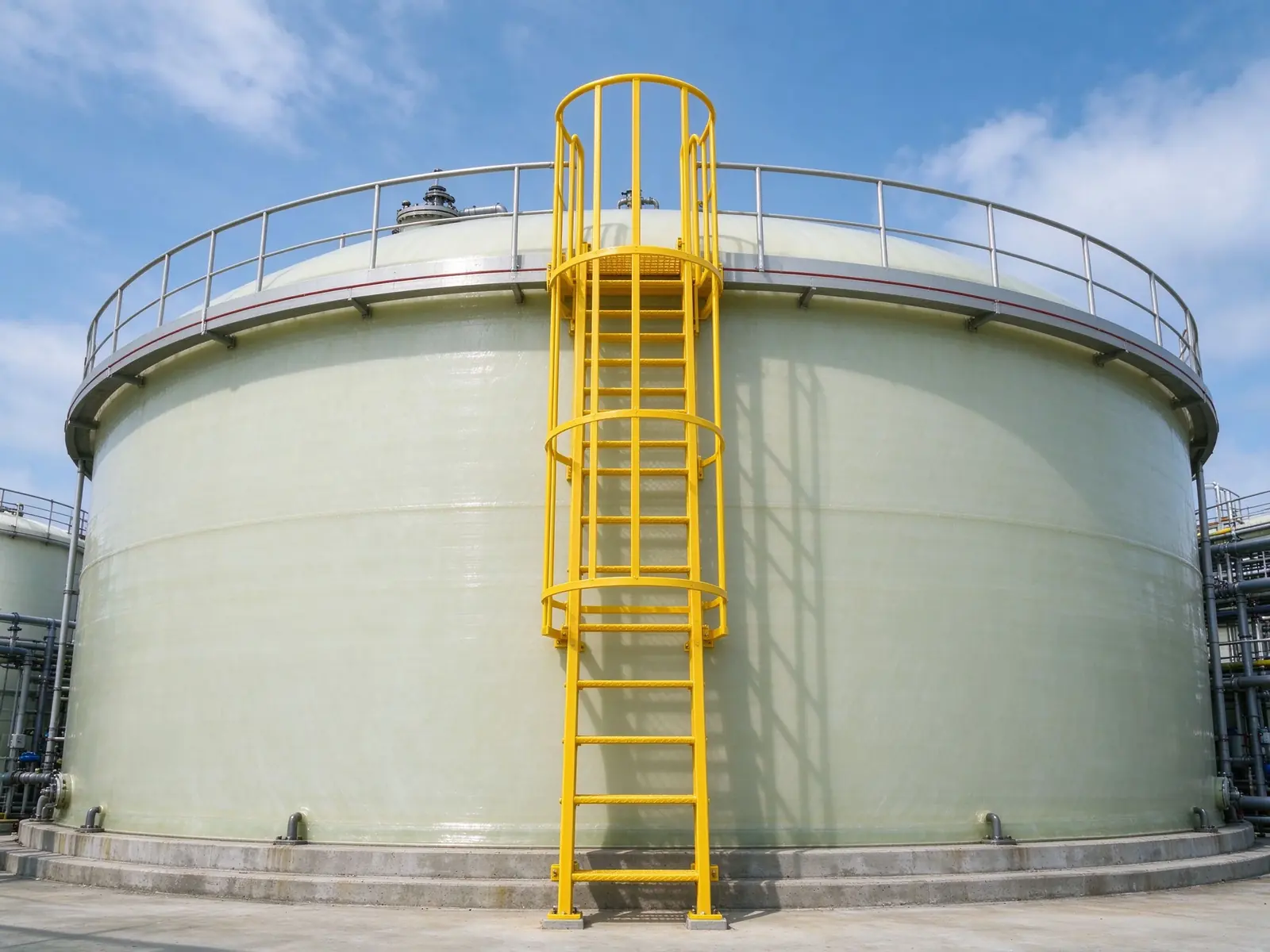
Passive Fall Restraint
The cage works as a passive restraint: if a worker slips, their body naturally meets the cage wall and a dangerous fall is stopped. Together with correct 75–90° installation, it protects climbers on every ascent.
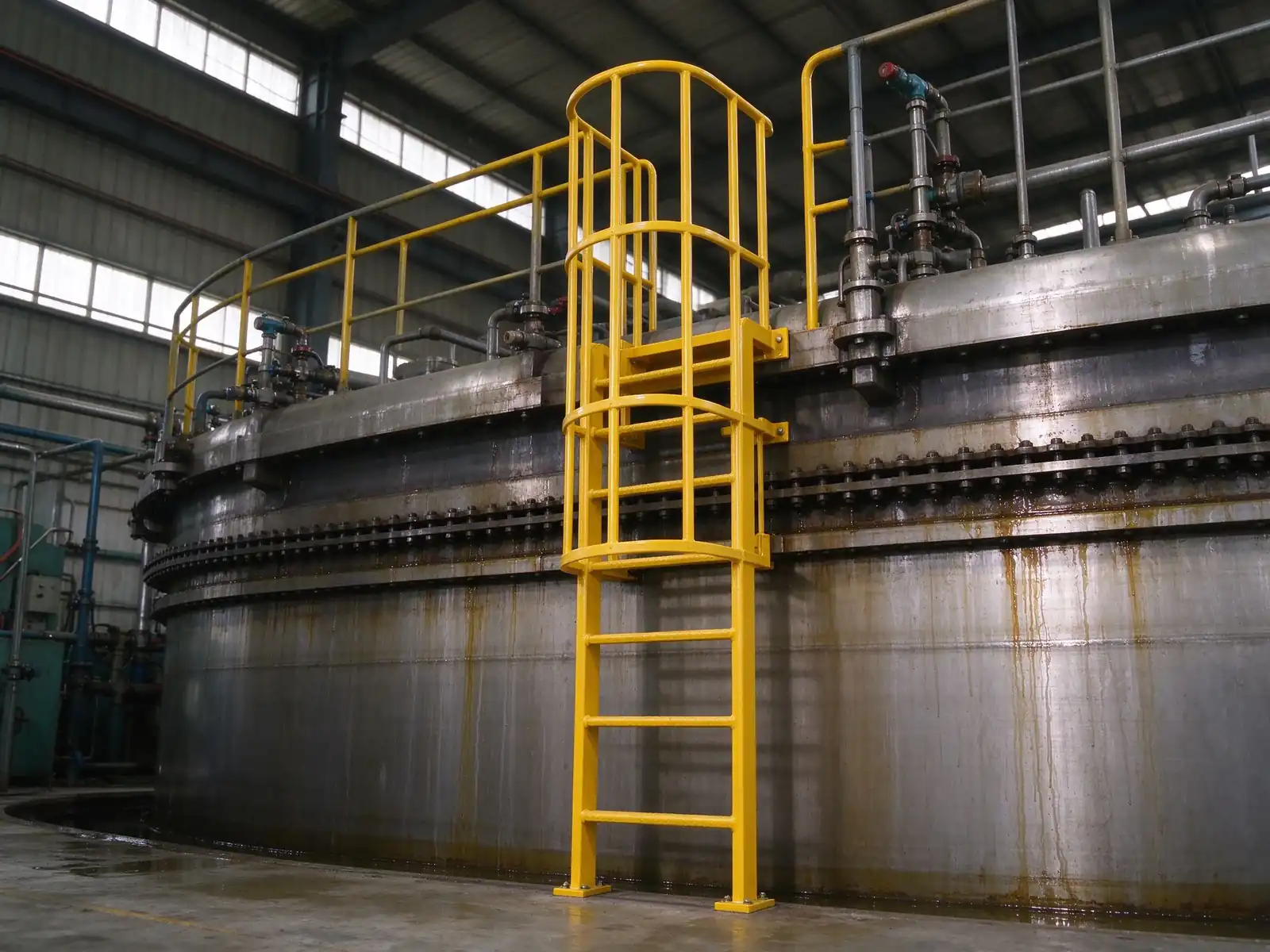
Global Standard Compliance
Engineered to OSHA 1910.28 and EN ISO 14122-4 — certified cage geometry and fall protection for your destination market, with FRP strength to the applicable standard.
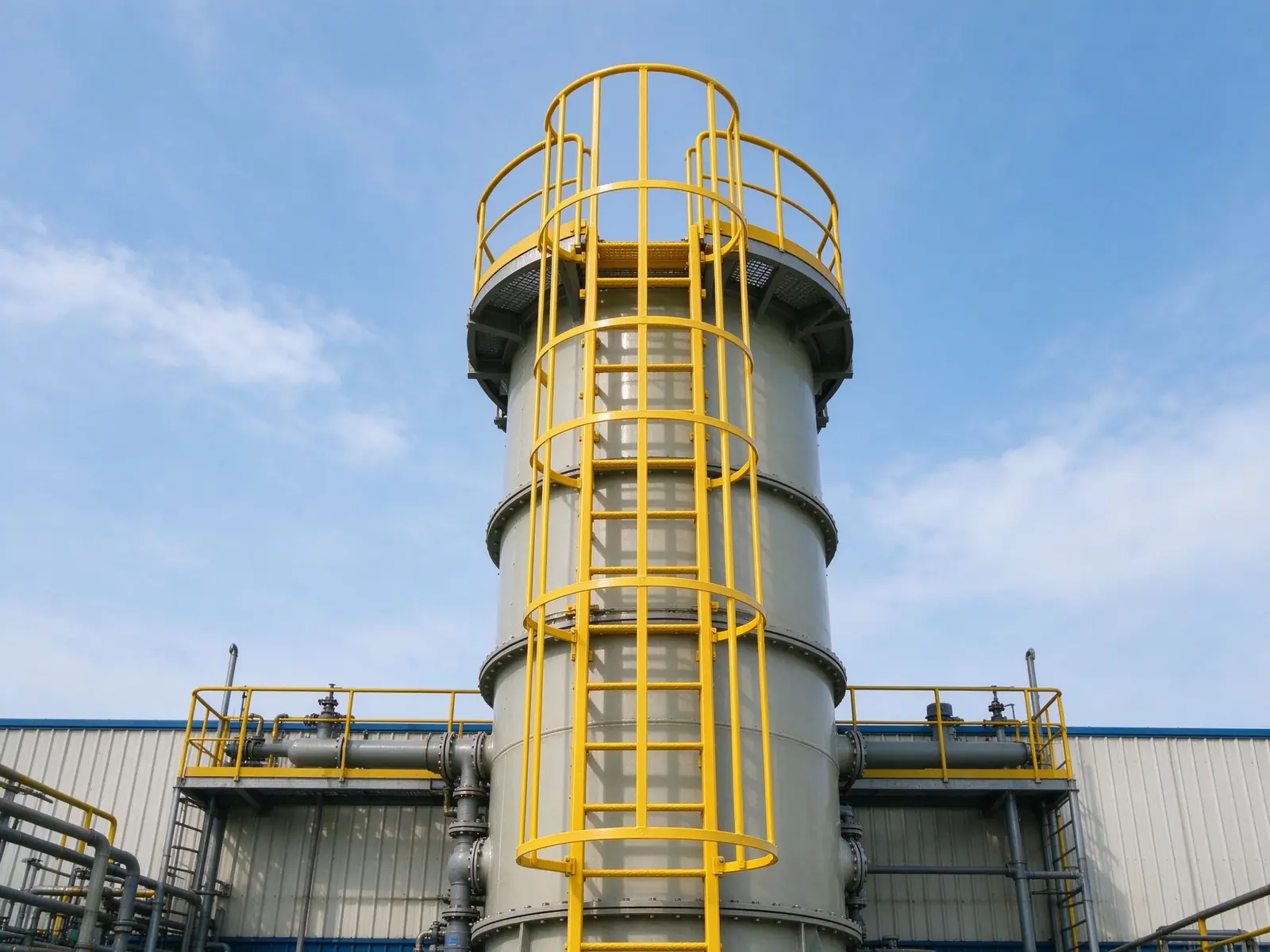
Custom Height & Mounting
Made to your drawing or dimensions — wall, tank, chemical vessel or substation mounting, per your site base. Fixed and modular height-adjustable systems cover every access need.
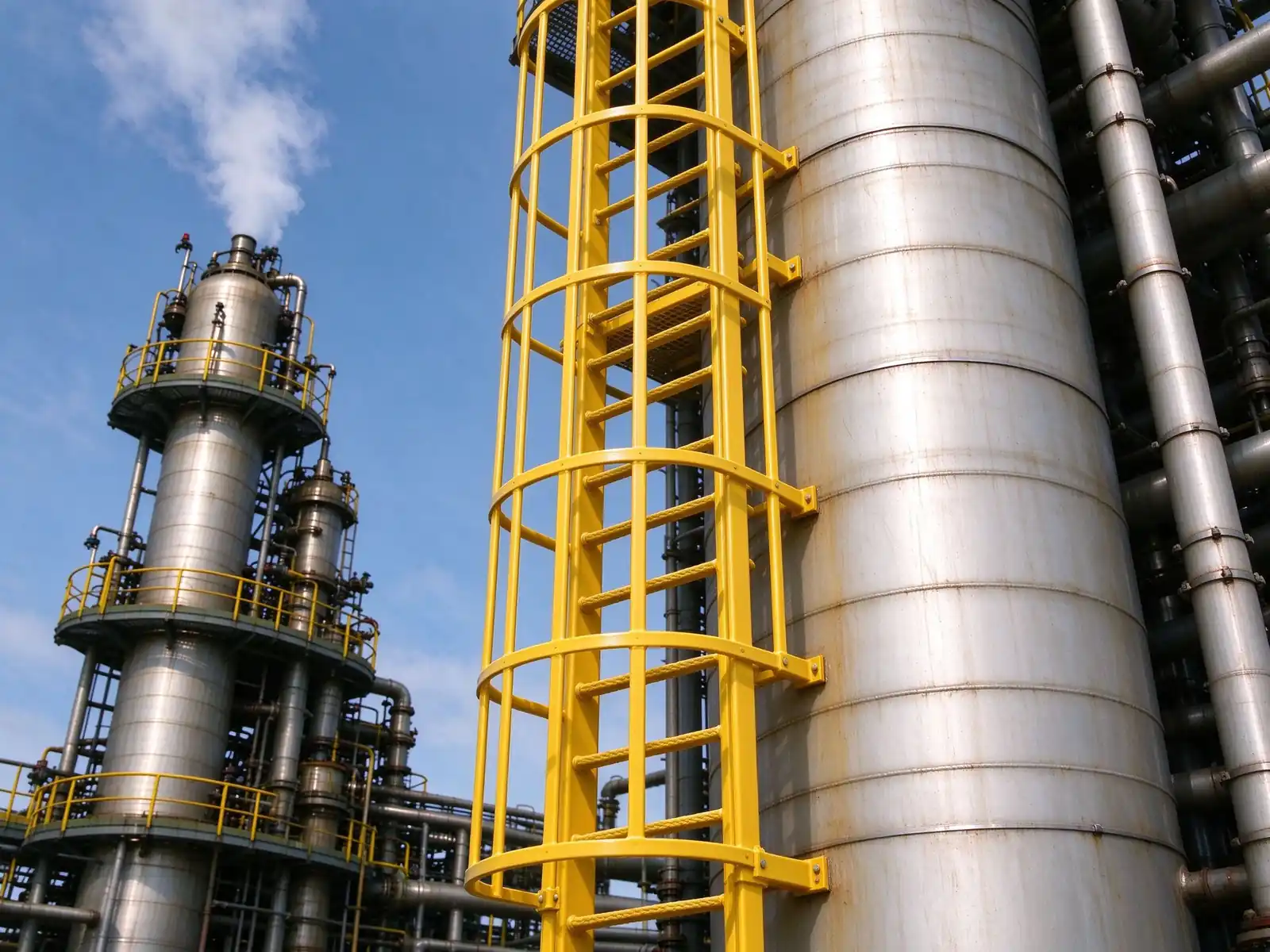
Intermediate Rest Platforms
For tall climbs, we add intermediate rest platforms that split the ascent and give workers a safe step-off point. This reduces fatigue and supports OSHA / EN rest-stop requirements.
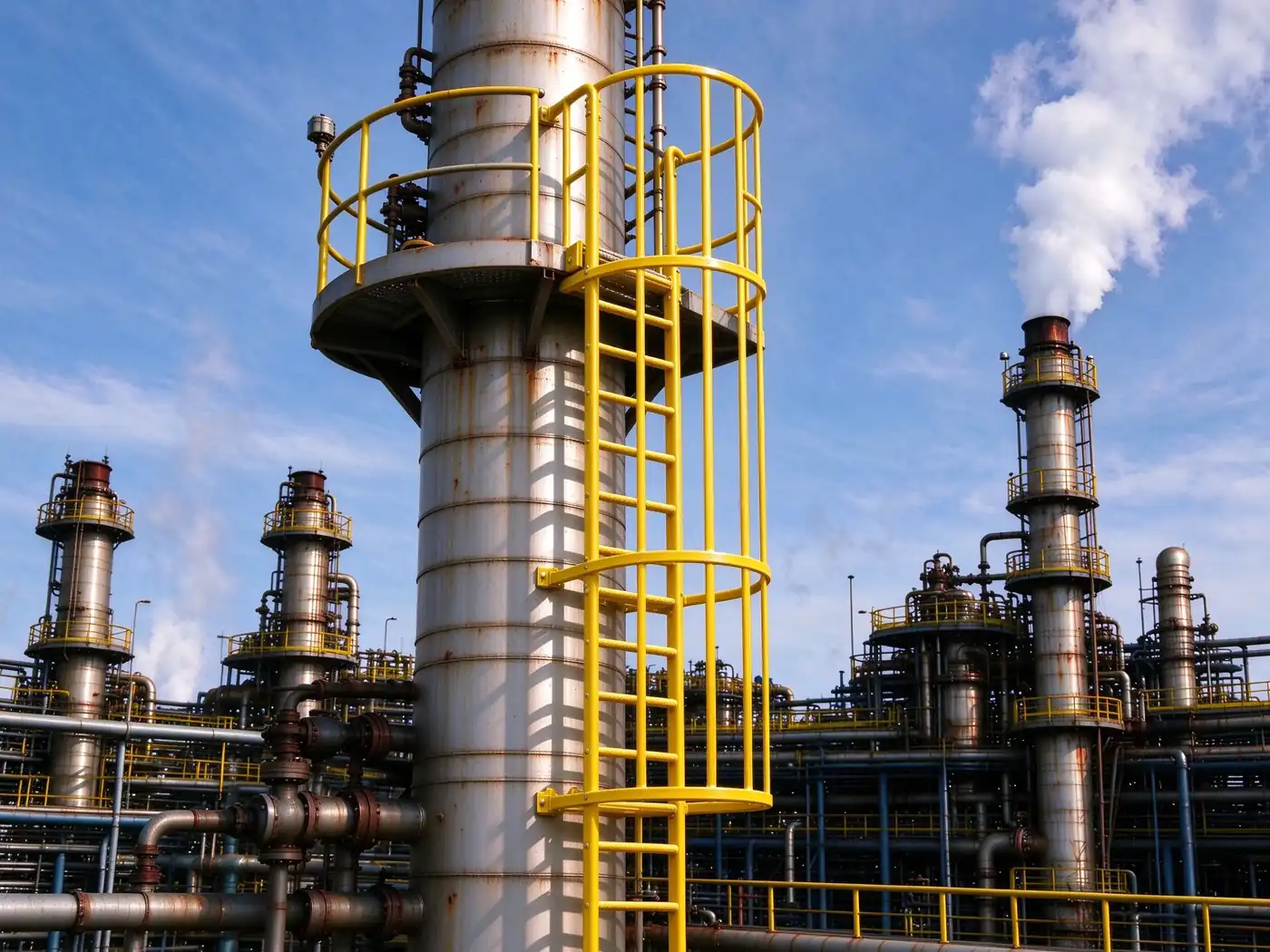
Traceable Quality & Testing
Material certificates, structural and rung load tests on every unit. Third-party inspection by SGS / TÜV / BV is available to back your compliance documentation.
FRP / Fiberglass Ladders — When You Need Non-Conductive or Chemical-Proof
FRP (fiber-reinforced polymer) is plastic rebar on a ladder scale. It doesn't conduct electricity, it doesn't rust, and it survives strong acids and alkalis that would destroy steel and even stainless. It's the last resort for the harshest environments.
The three superpowers of FRP:
- 1. Non-conductive: Zero electrical conductivity. Safe around high-voltage equipment, substations, and power plants. No shock hazard if you accidentally touch a live wire.
- 2. Chemical-resistant: Survives sulfuric acid, hydrochloric acid, caustic soda, and most industrial chemicals. Where stainless pitted in months, FRP lasts decades.
- 3. Zero maintenance: No painting, no coating, no rust check. Just install and forget. UV-stable formulations handle outdoor sun exposure too.
When to choose FRP:
- ✅ Chemical plants, acid storage tanks, wastewater treatment
- ✅ Power plants, electrical substations, near high-voltage lines
- ✅ Explosive environments (Zone 1 / Zone 2) — no sparking
- ✅ Coastal / offshore where even 316L isn't enough
The trade-offs:
- ⚠️ More expensive — typically 2-3x the cost of galvanized steel
- ⚠️ Lower strength — need heavier profiles to match steel load capacity
- ⚠️ Can be damaged by concentrated strong solvents (ketones, etc.)
DengTAI practice:
We use pultruded FRP profiles with a UV-stable polyester resin. Yellow is the standard color for safety visibility, but we can do gray, green or custom. All hardware is 316 stainless or FRP-bolted — no dissimilar metal contact that would cause galvanic corrosion.
Installation & Maintenance of FRP Ladders
Installation tips:
- ✅ Use 316 stainless or FRP bolts — don't use plain steel fasteners, they'll corrode and stain the FRP.
- ✅ Don't drill too tight — FRP is brittle. Drill slightly oversized holes and use nylon washers.
- ✅ Handle carefully — FRP can crack if dropped or hit. It's lighter than steel, but more fragile.
- ✅ Support every 2 meters — FRP deflects more than steel, so you need more wall brackets.
Maintenance schedule:
- 📅 **Every year:** Inspect bolts and tighten. Check for any cracks or chips — touch up with gel coat resin if needed.
- 📅 **Every 5 years:** Full inspection — check rung welds, cage hoops, and mounting brackets. FRP doesn't corrode, but UV can weaken it over decades.
- 📅 **Wash as needed:** FRP is easy to clean — just hose it down. Chemical spills can be washed off immediately with no damage.
Expected lifespan:
FRP ladders last 20-30 years in chemical plants and corrosive environments — where steel would last 2-3 years. That's the value proposition: higher upfront cost, but much lower total cost of ownership. No painting, no rust repair, no replacement every few years.
Dimensions, Weight & Surface Area
Standard engineering values per EN ISO 14122-4 / OSHA 1910.28. Custom heights, cage diameters, weights and quantities are provided with your quotation.
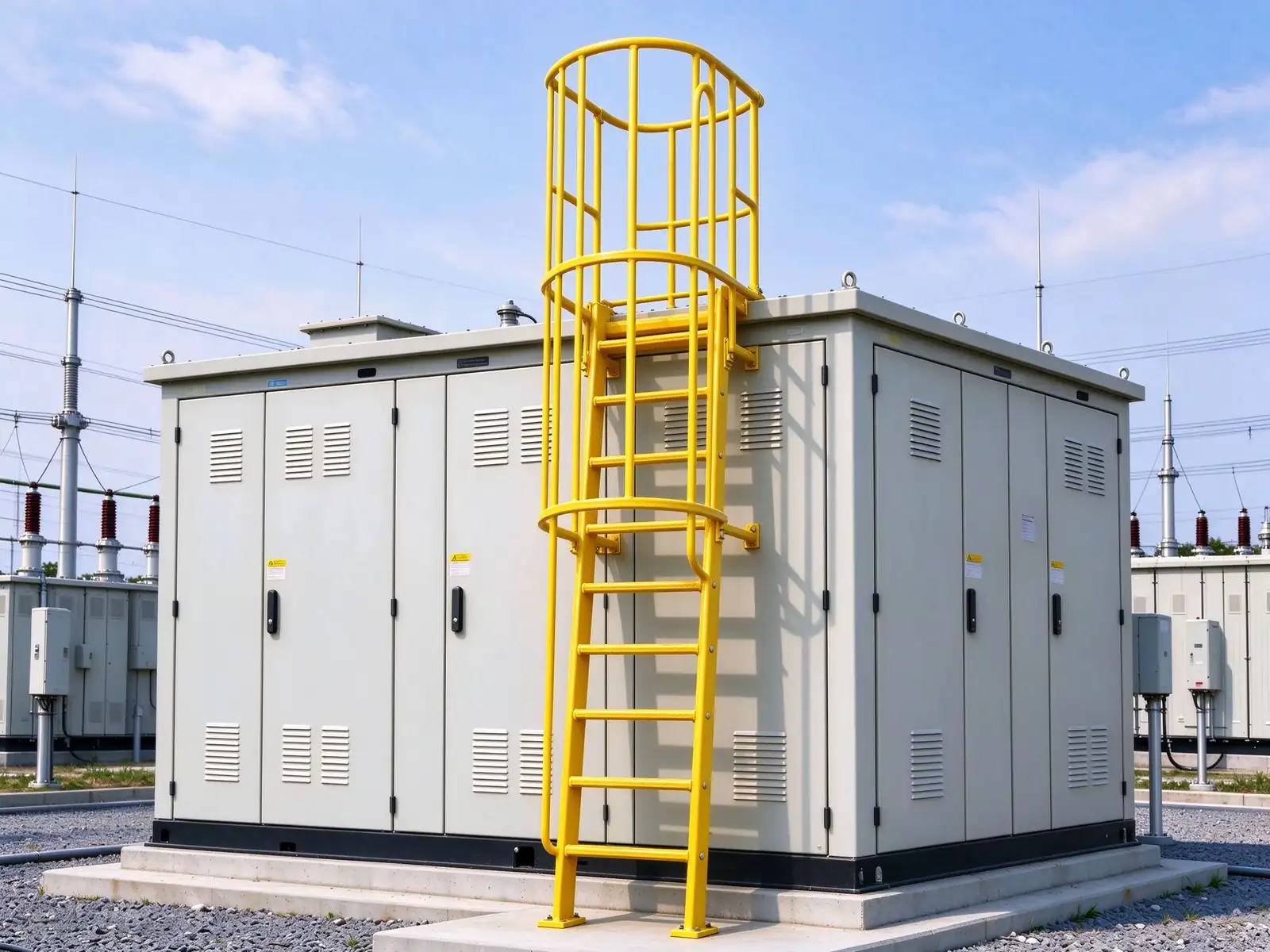
| Product Type | Fixed vertical FRP ladder with safety cage / hoops |
|---|---|
| Base Material | FRP (fiberglass reinforced plastic) — non-conductive |
| Surface Finish | UV-stable, corrosion-proof — no coating required |
| Side Rails | Pultruded FRP profiles, two rails |
| Rungs | FRP round or serrated rungs, spacing 250–300mm |
| Rung Load | 1.5kN (EU) / 250lb≈1.1kN (US) single-rung load |
| Cage Diameter | 650–800mm (custom) |
| Cage Hoops | FRP hoops, spacing 1200–1500mm |
| Cage Uprights | FRP vertical guards |
| Cage Start / Top | Starts 2.1–2.4m above ground; extends 1.1m above platform |
| Wall Clearance | ≈178mm (7") from rungs to wall |
| Weight / Area | Calculated per model & height in your quotation (light, low-maintenance) |
| Mounting | Wall, tank, vessel or substation supports — FRP / stainless brackets |
| Standards | OSHA 1910.28 / ANSI / EN ISO 14122-4 |
Global Price Range (USD)
Indicative FOB price ranges by configuration, in US dollars. Final pricing is per your drawing, height, quantity and destination — confirmed in your quotation.
| Configuration | Typical Height | Global Price Range (USD) |
|---|---|---|
| Type 1 — Fixed Ladder | 3 – 6 m | $350 – $800 |
| Type 2 — Caged Ladder | 3 – 10 m | $700 – $1,700 |
| Type 3 — Caged Ladder with Top Handrail | 3 – 10 m | $900 – $2,100 |
| Type 4 — Fixed Ladder with Safety Cage, Intermediate Rest Platforms (Landings) and Guardrails | up to 15 m+ | $1,300 – $3,800 |
Prices are in USD, indicative ranges only — actual quotes depend on FRP grade, height, accessories and freight. Contact us for an exact FOB price.
Four Configurations for Every Access Need
From a plain fixed ladder to a full caged system with handrail and platform. The right type is selected by your working height and regional standard — we show the standard cage threshold for each.
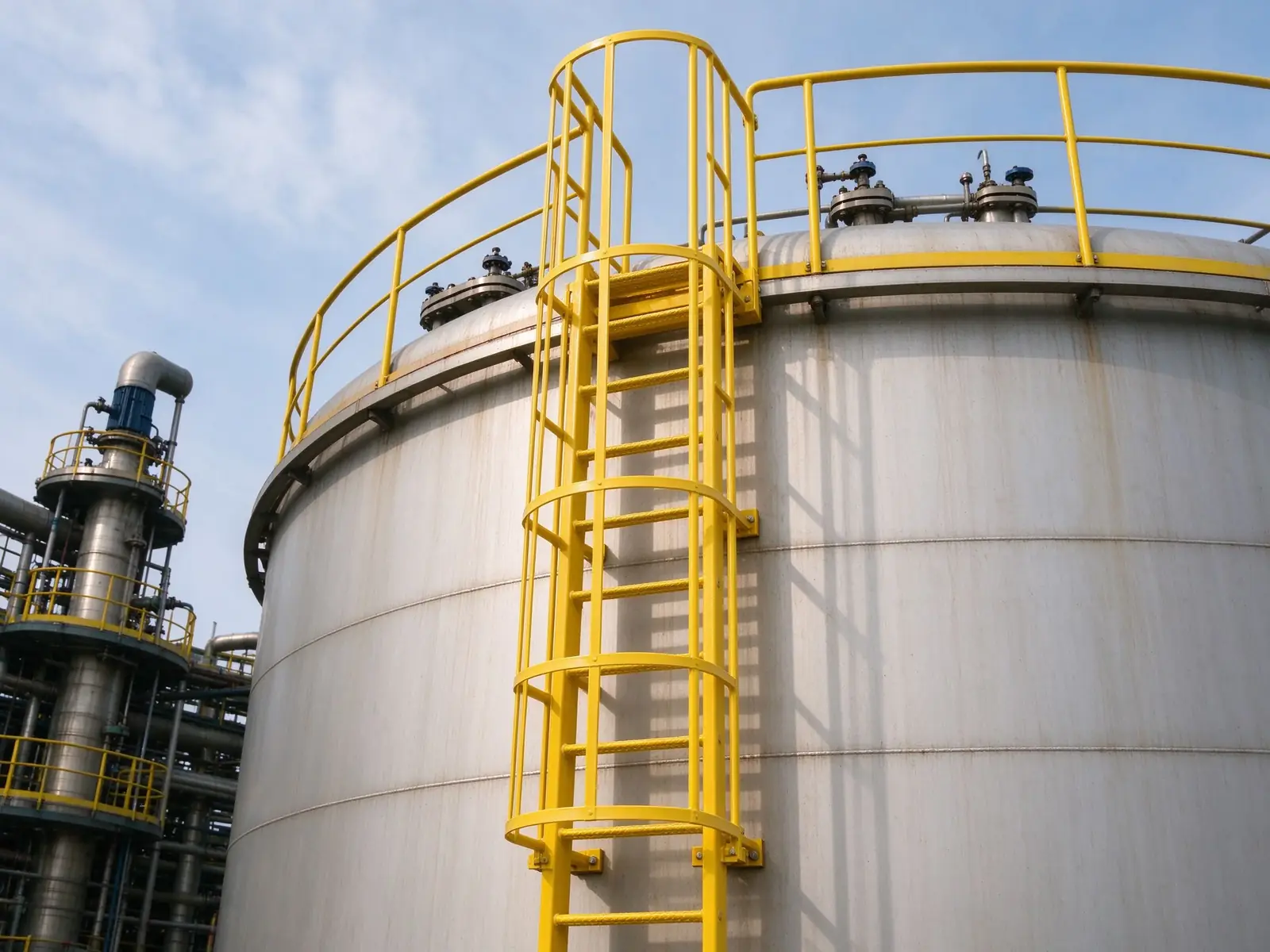
Fixed Ladder
A simple vertical ladder with two rails and rungs, used where height stays below the cage-free limit. Ideal for short access inside plants, basements and pump rooms.
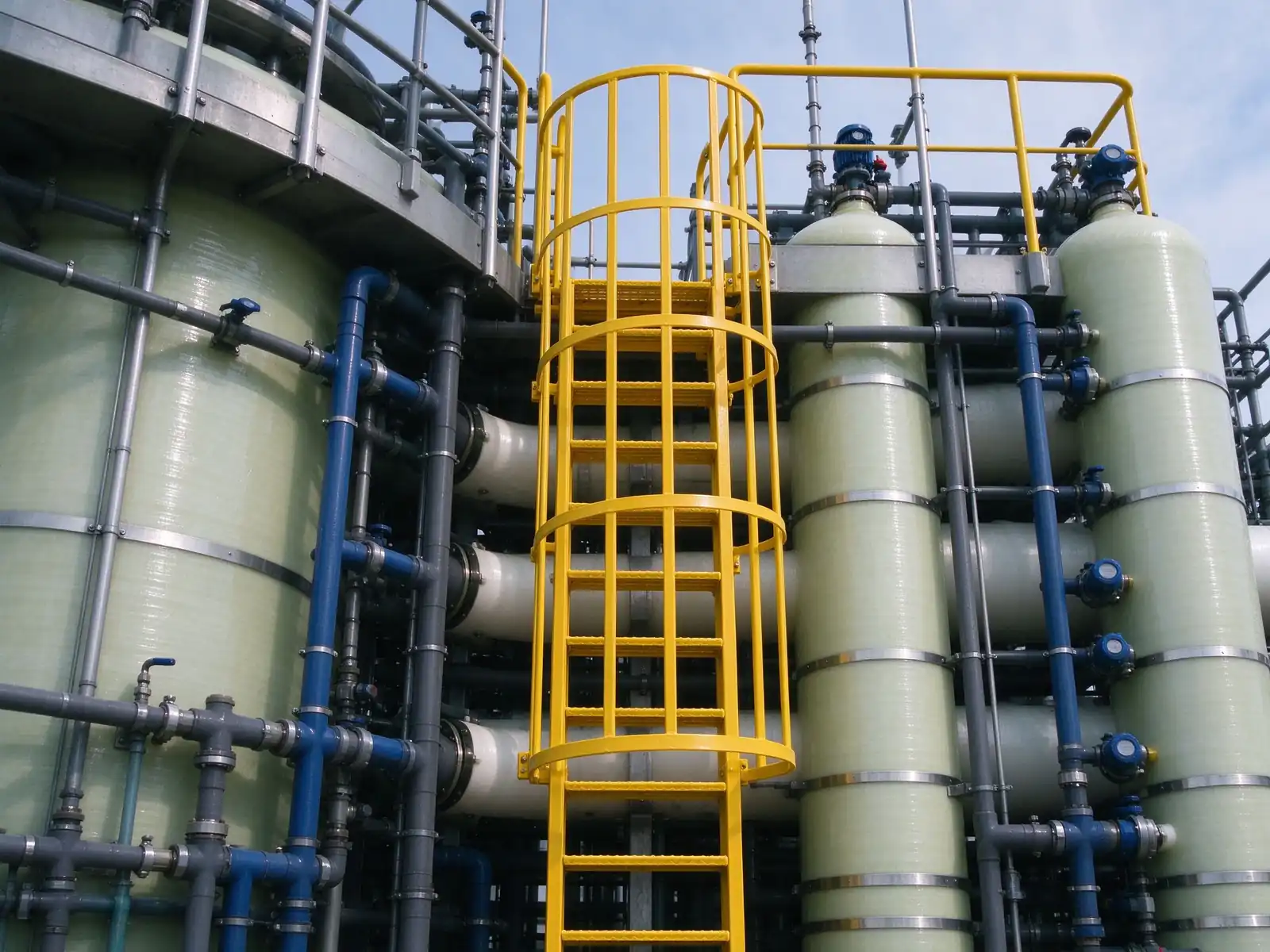
Caged Ladder
A vertical ladder wrapped by hoops and vertical guards around the climbing space, giving fall protection. This is the standard configuration for most tank and chemical-vessel access.
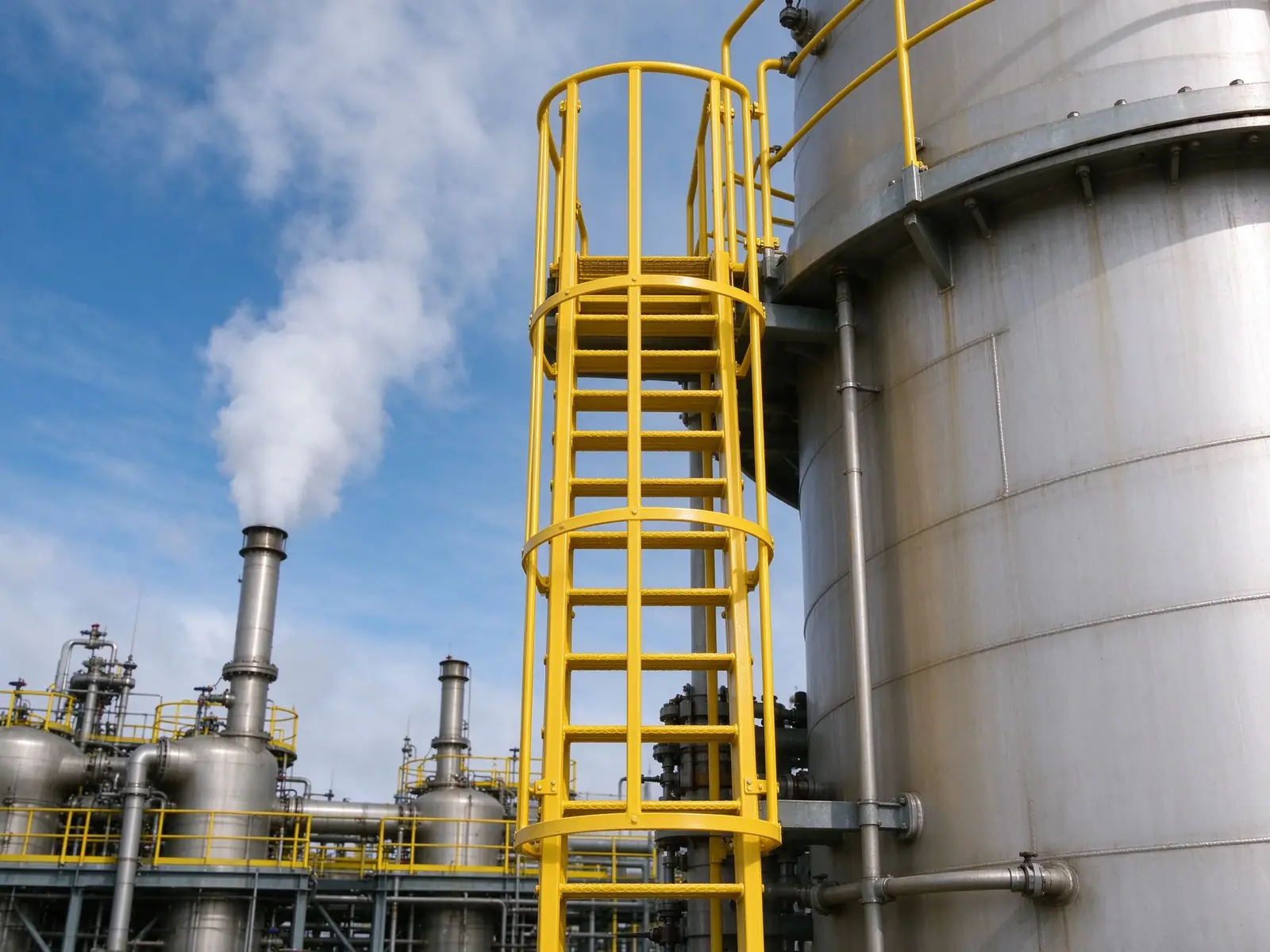
Caged Ladder with Top Handrail
Adds a top handrail that extends above the landing to guide the climber onto the platform. Required where side rails must extend 1.1m (42") above the access level.
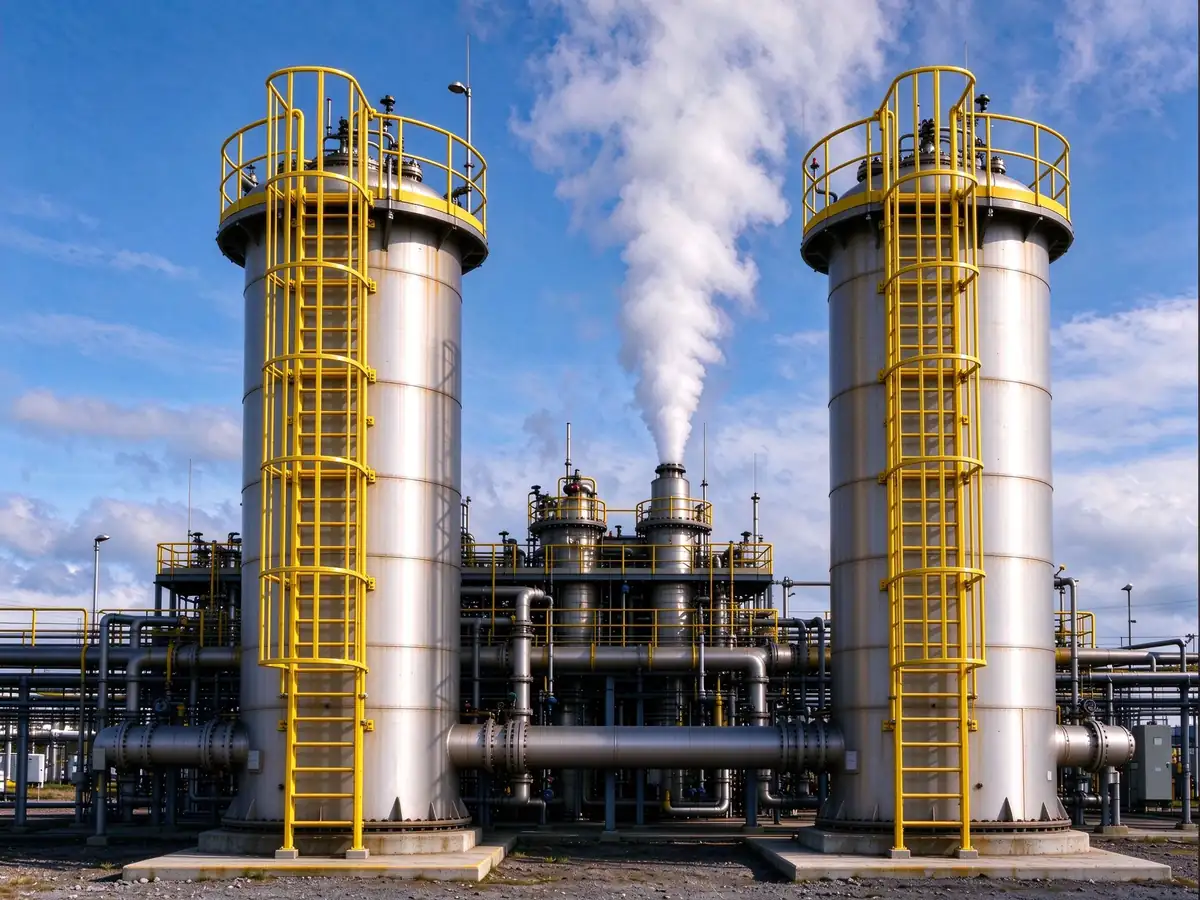
Fixed Ladder with Safety Cage, Intermediate Rest Platforms (Landings) and Guardrails
The full system with intermediate rest platforms for tall climbs, reducing fatigue on multi-storey access. Platforms split the climb every 6m and allow safe stepping off.
Why FRP? The Corrosion-Proof, Non-Conductive Choice
FRP is the corrosion-proof, non-conductive specialist of caged ladders. Here is what, why, how and when from a manufacturer’s perspective.
What is FRP?
Fiberglass reinforced plastic combines a polymer resin with glass-fiber reinforcement, giving high strength, low weight, non-conductivity and outstanding corrosion resistance. It is the specialist choice for chemical, electrical and water-treatment environments.
Why it matters for safety & longevity
FRP is non-conductive — safe around live conductors — and chemically inert, resisting acids, alkalis and salts for decades without coating. This cuts replacement and maintenance cost while protecting workers in hazardous plants.
How we build it
FRP profiles are pultruded, cut to drawing, and assembled with bolted or adhesive connections. UV-stable and corrosion-proof, each unit is checked for dimension and rung load before delivery.
When FRP is the right choice
For chemical plants, electrical & power stations, water treatment and coastal environments where acids, alkalis, salts or live conductors would corrode or endanger metal ladders, FRP is the sensible default.
Material Properties & Service Life
| Base Material | FRP (fiberglass reinforced plastic) — pultruded profiles combining thermoset resin with glass-fiber reinforcement. Non-conductive, lightweight and chemically inert. |
|---|---|
| Corrosion Protection | FRP is inherently corrosion-proof — no coating required. Resists acids, alkalis, salts and harsh industrial atmospheres that quickly corrode steel. UV-stable resin surface for outdoor exposure. |
| Surface Finish Options | • Smooth pultruded profile surface — UV-stable resin finish, standard grey or custom colors • Serrated / gritted rungs for slip resistance, wet or dry • No painting or coating — maintenance-free by design |
| Load & Strength | High strength-to-weight ratio; designed per EN ISO 14122 / OSHA 1910.27 — 1.5 kN concentrated load on rungs. Lightweight for easy handling without structural compromise. |
| Service Life | Decades in corrosive and coastal environments with minimal maintenance. No rust, no coating to touch up. Inspect fixings and surfaces periodically. |
| Best Applications | Chemical plants, electrical & power stations, water treatment and wastewater works, coastal and salt-air sites. For high-temperature or severe-UV locations, specify UV-stabilized / heat-resistant resin grade. |
| Maintenance | • Wash with water to remove chemical residue, salts and grime • Inspect rung fixings and cage connections annually • No painting or re-coating required • Tighten bolted connections per schedule |
| Touch-Up Procedure | FRP needs no touch-up. If the surface is abraded: clean, sand lightly and apply matching resin gelcoat if required — unlike steel, no rust primer is ever needed. |
| Cost Efficiency | Higher upfront cost than carbon steel but the lowest life-cycle cost in corrosive duty — no painting, no coating renewal, no replacement. Best ROI for chemical, water and coastal exposure. |
Where Our FRP Caged Ladders Are Installed
FRP caged ladders are the corrosion-proof vertical access for chemical, electrical and water-treatment facilities worldwide.
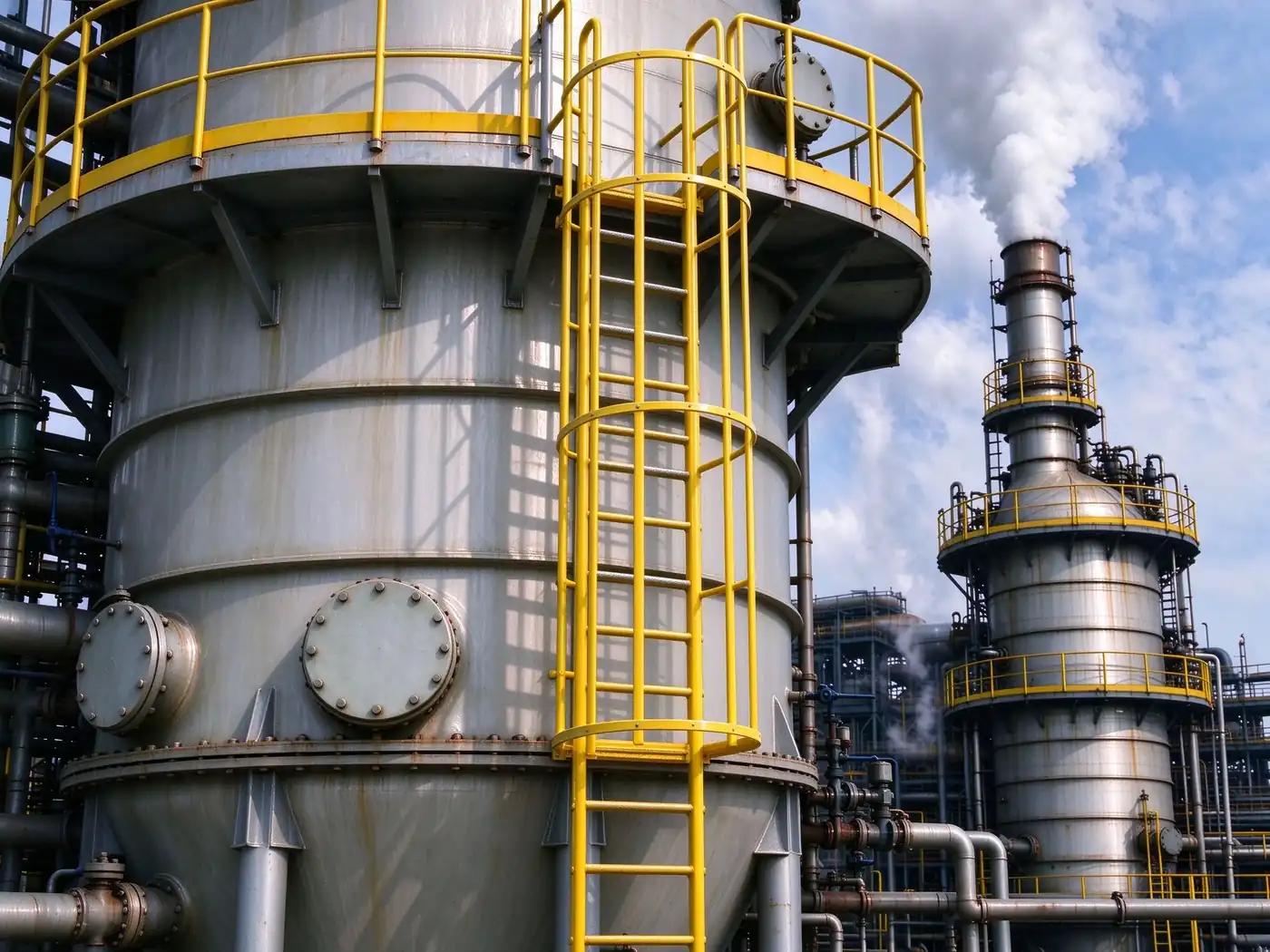
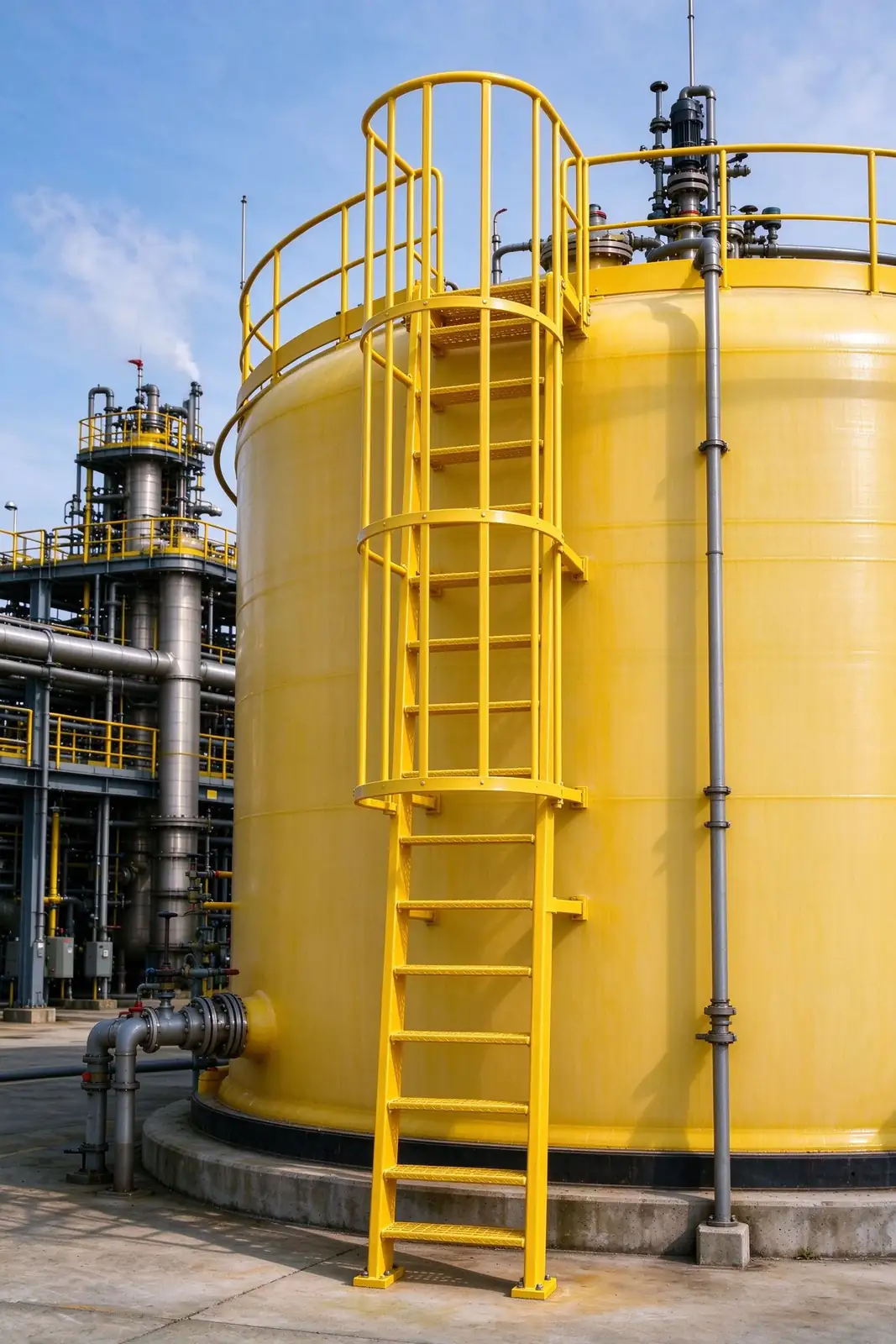
Chemical & Storage Tanks
External caged ladders for tank-top valves and vessel inspection in corrosive chemical plants.
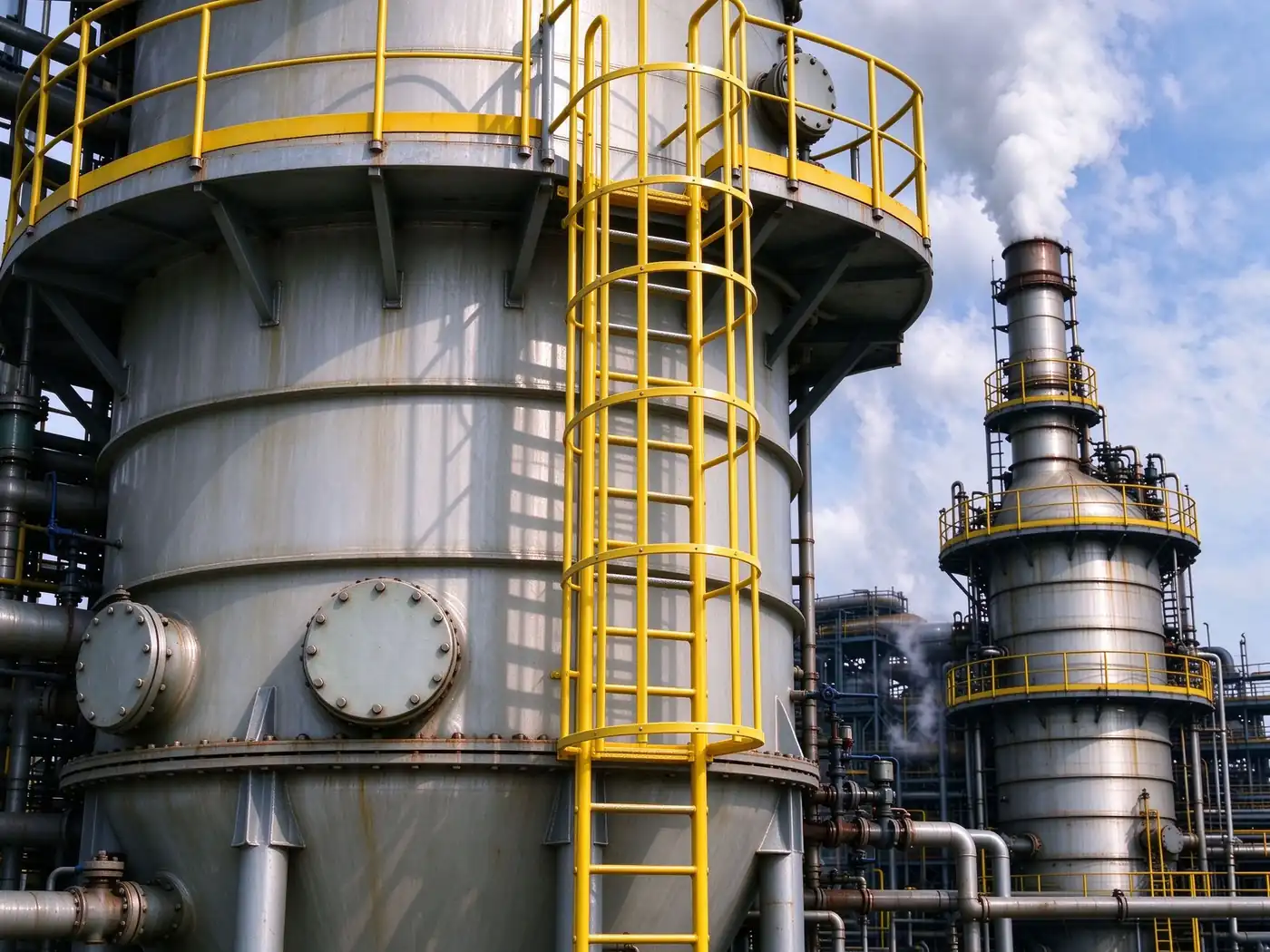
Process & Chemical Plants
Non-conductive access to elevated platforms, reactors and process structures in chemical plants.
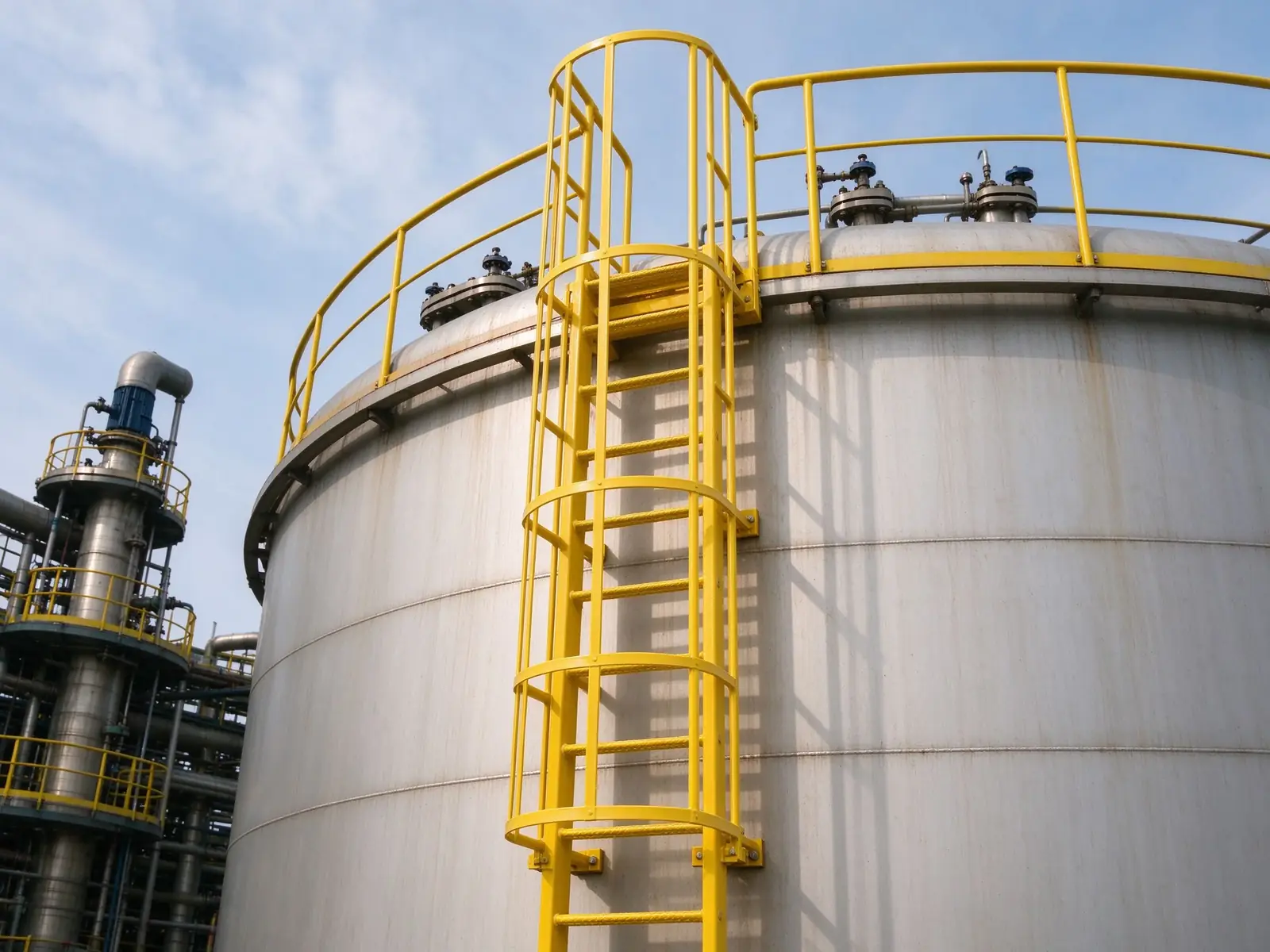
Water Treatment & Roof Access
Corrosion-proof access on clarifiers, filter beds and water-treatment structures and roofs.
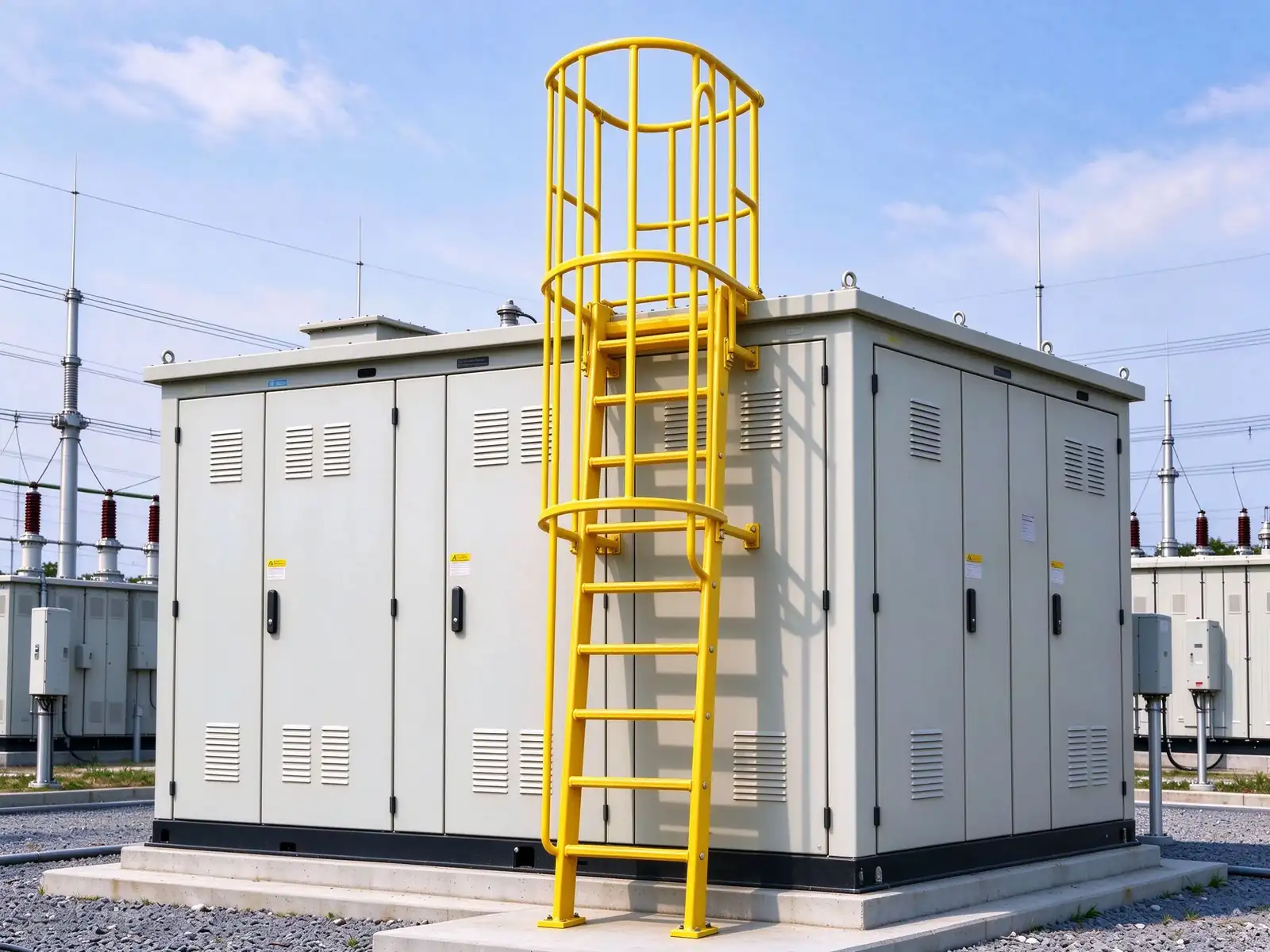
Electrical & Power Stations
Non-conductive access on switchgear, substations and power-station structures where metal is unsafe.
Coastal & Corrosive Sites
Salt-resistant access on jetties, coastal plants and industrial structures exposed to aggressive atmospheres.
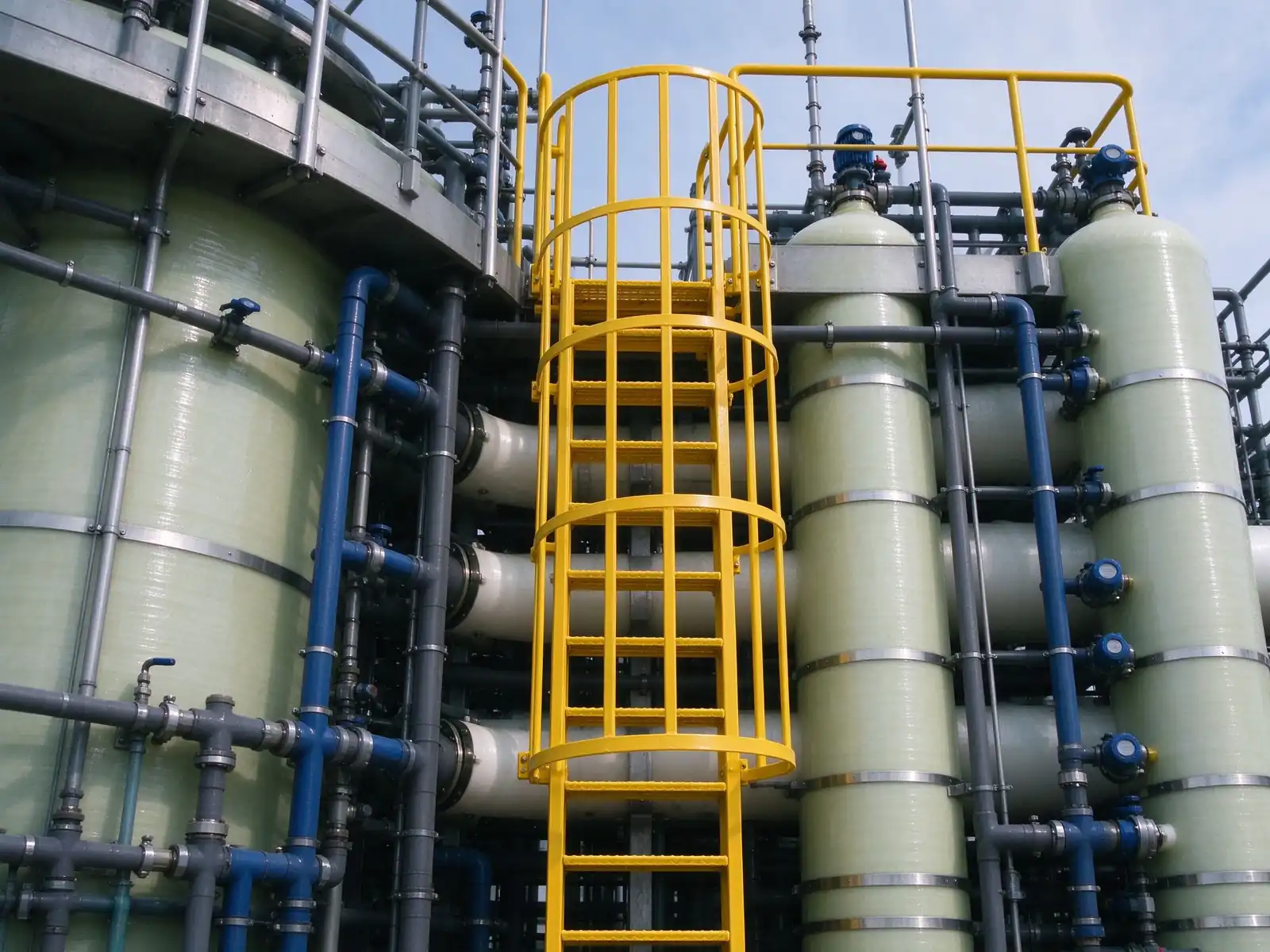
Factories & Wastewater
Maintenance and inspection access in factories, wastewater and environmental plants.
FRP Caged Ladder Case Studies
Six real installations by DengTAI — FRP caged ladders supplied and installed across chemical, water and coastal projects.
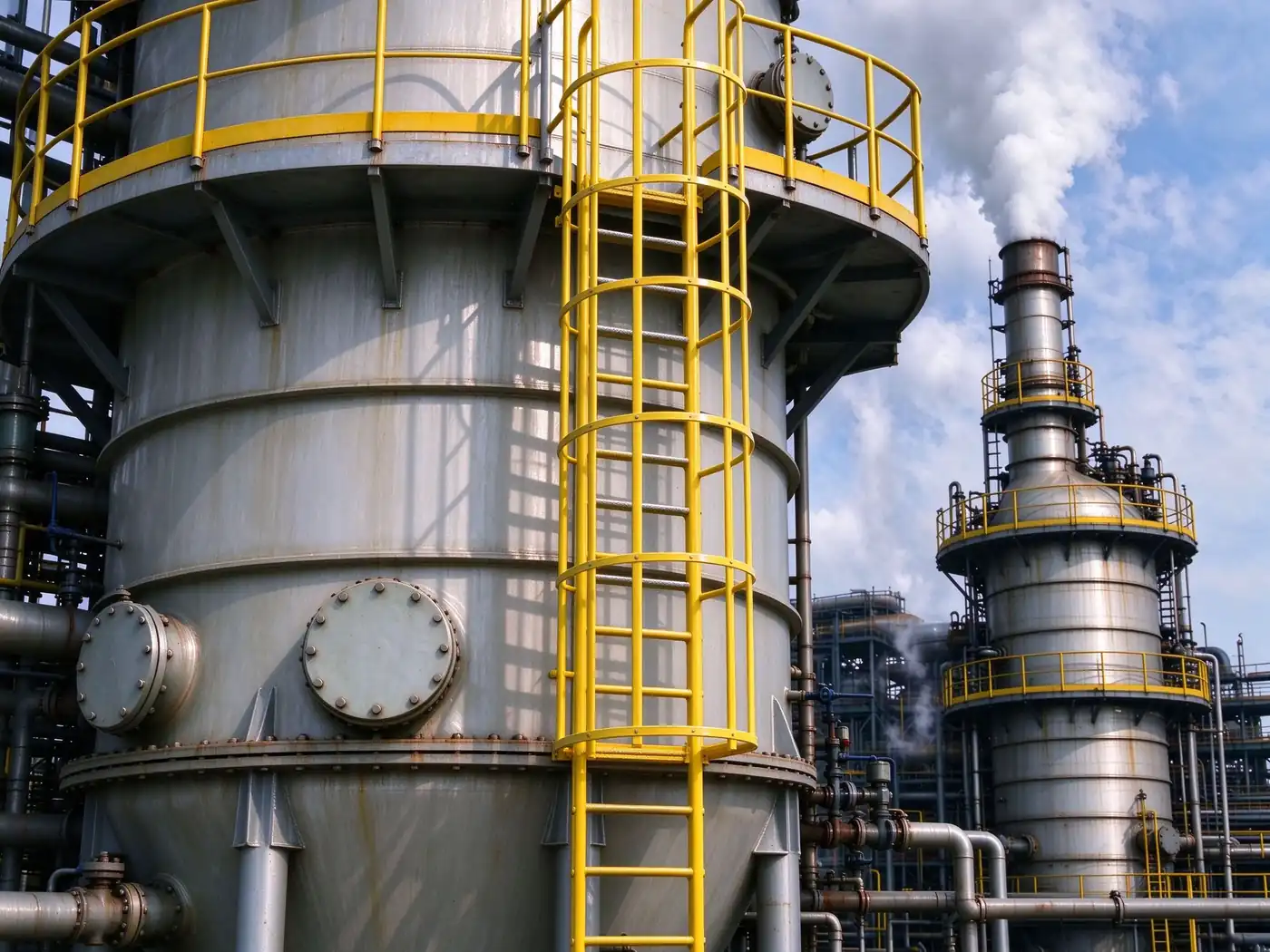
Storage Tank Access
FRP caged ladder installed on a chemical storage tank, reaching the tank top for inspection.
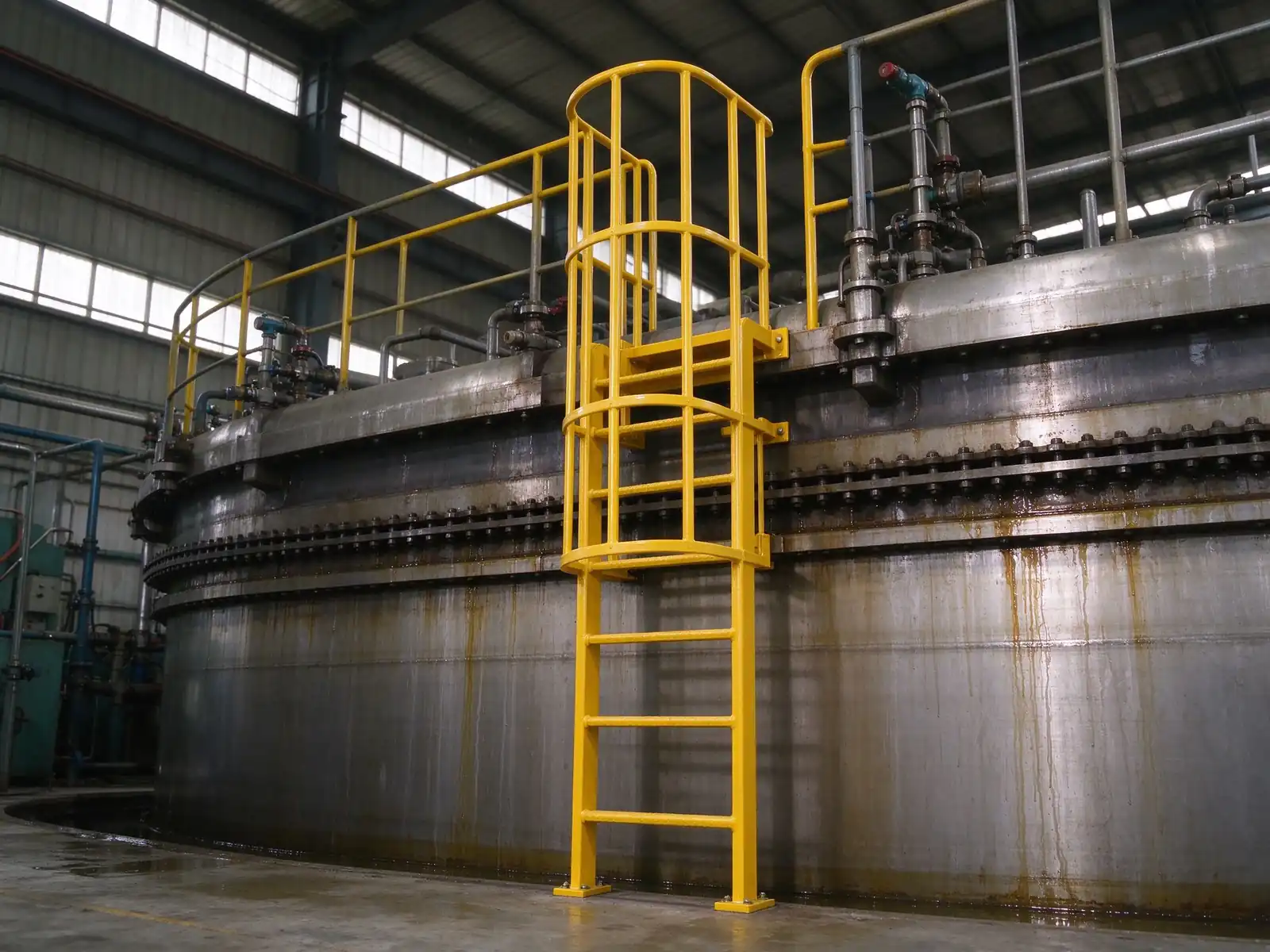
Vessel Inspection Access
Corrosion-proof FRP caged ladder beside a vessel manhole for safe maintenance access.
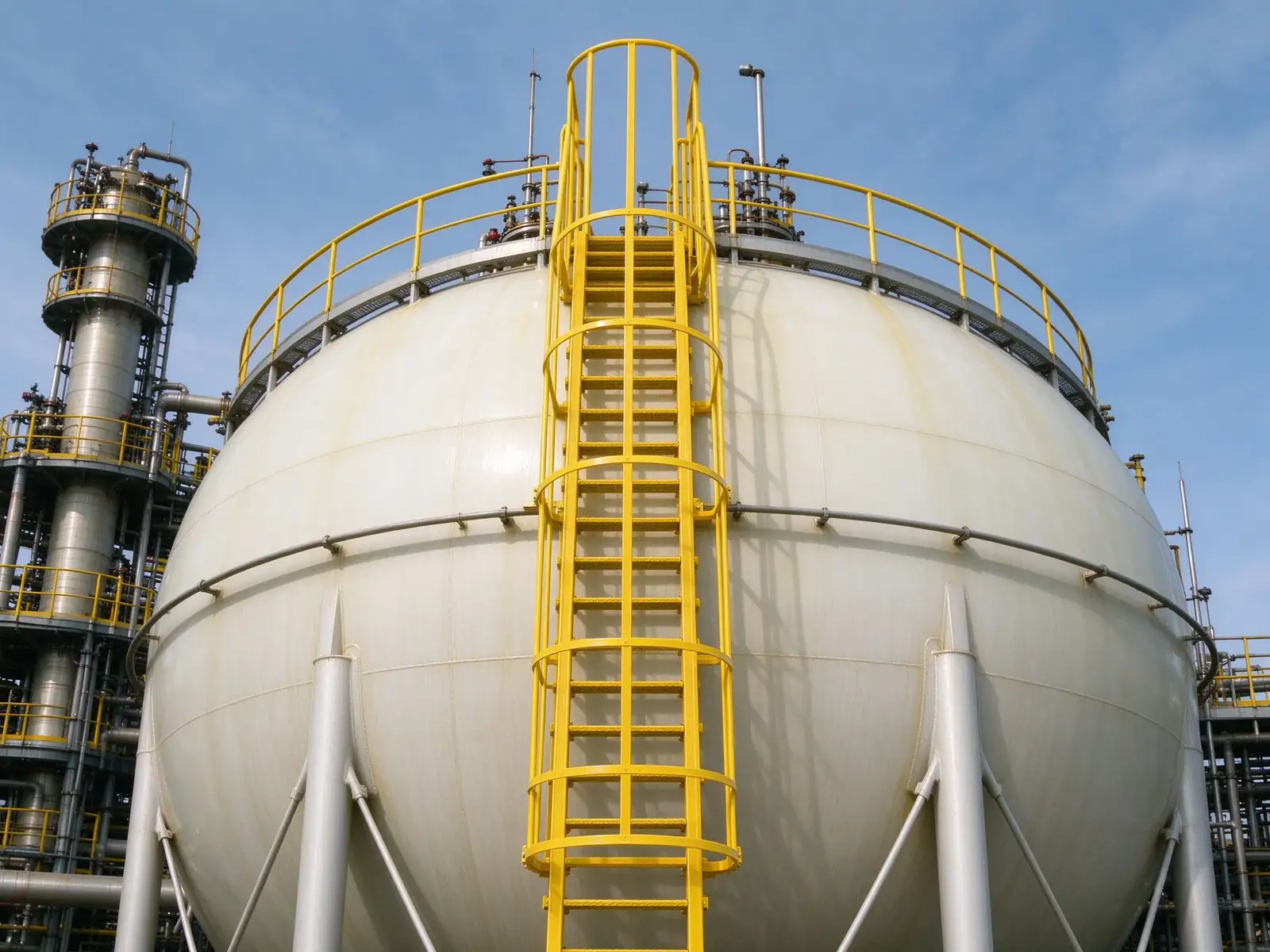
Elevated Tank Maintenance
FRP caged ladder used for elevated tank-top maintenance in a process plant.
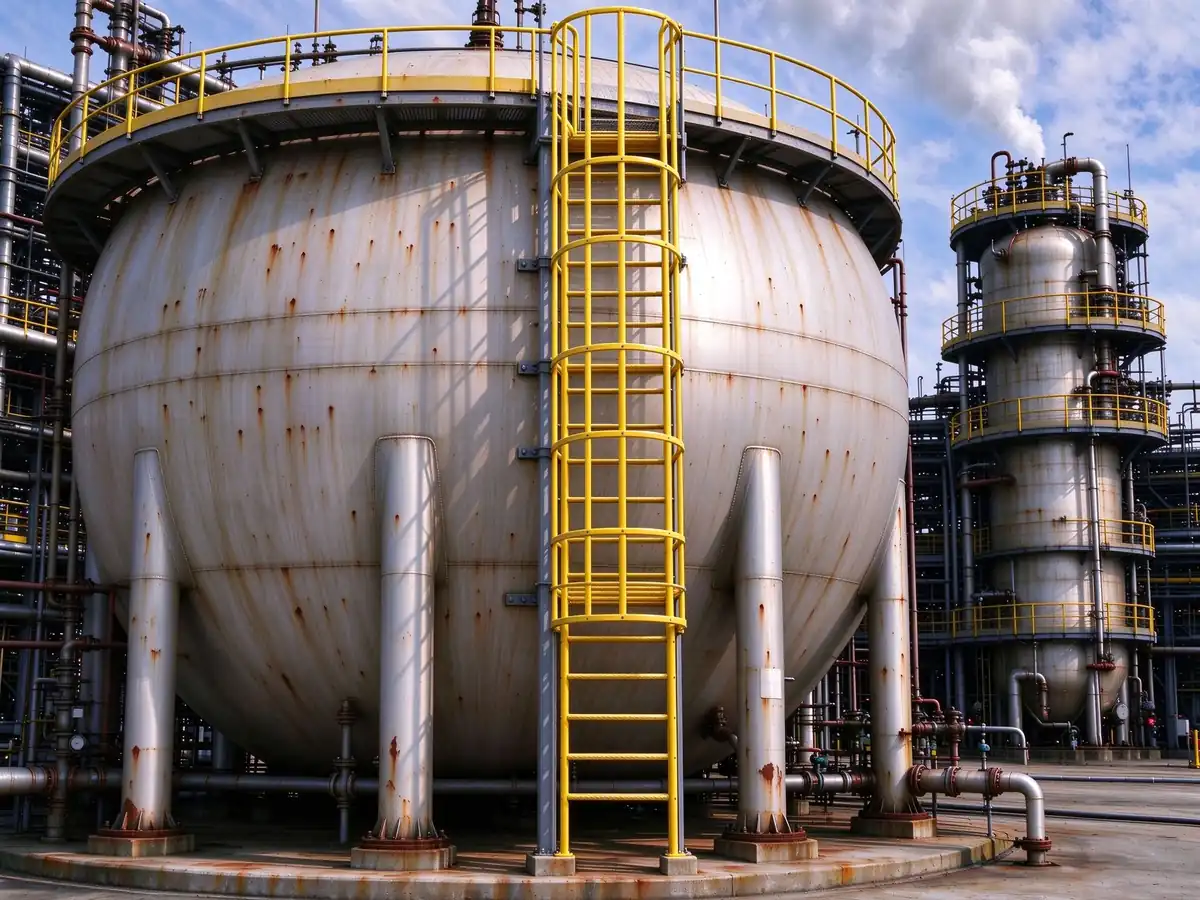
Shaft & Chamber Access
Non-conductive FRP caged ladder installed inside a concrete shaft for underground equipment access.
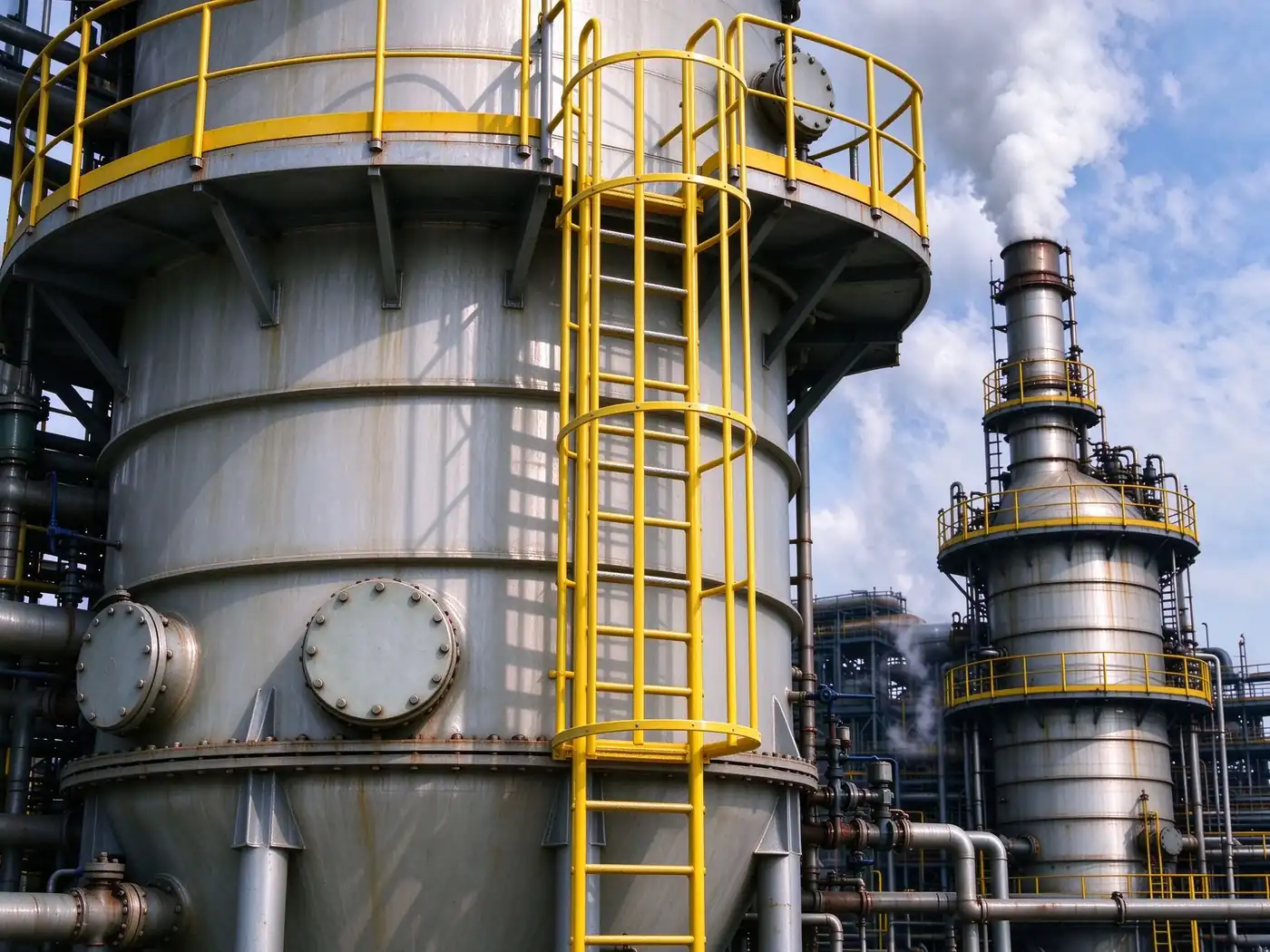
Tank Farm Access
Corrosion-proof FRP caged ladder on a tank farm, integrating with the surrounding structure.
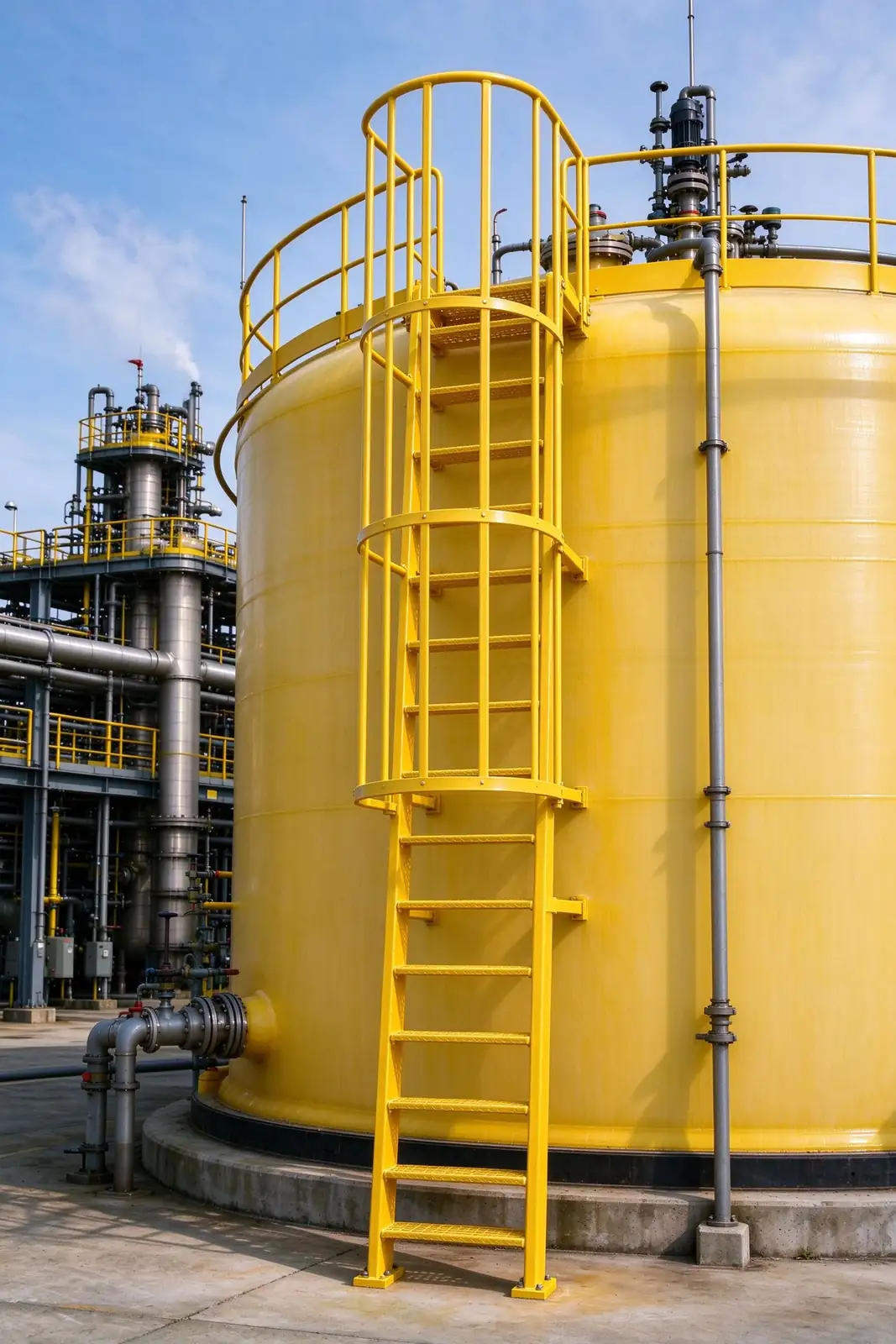
Large Vessel Access
FRP caged ladder reaching a large white storage vessel for roof and gauge access.
Made In Our Own 3,000m² Workshop
DengTAI Stair Manufacturing Co., Ltd. is a stair & ladder manufacturer from Shijiazhuang, Hebei, China — with in-house cutting, welding, coating and assembly under one roof.
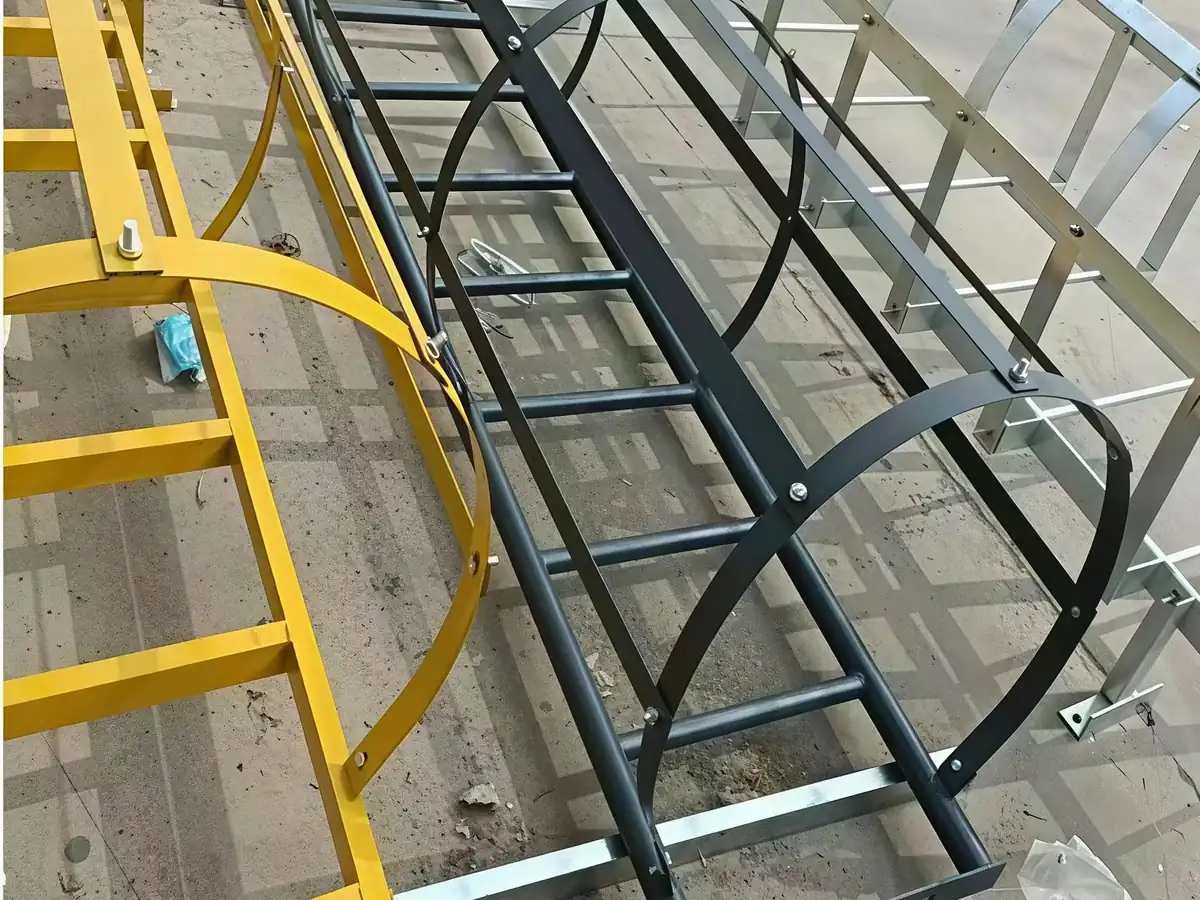
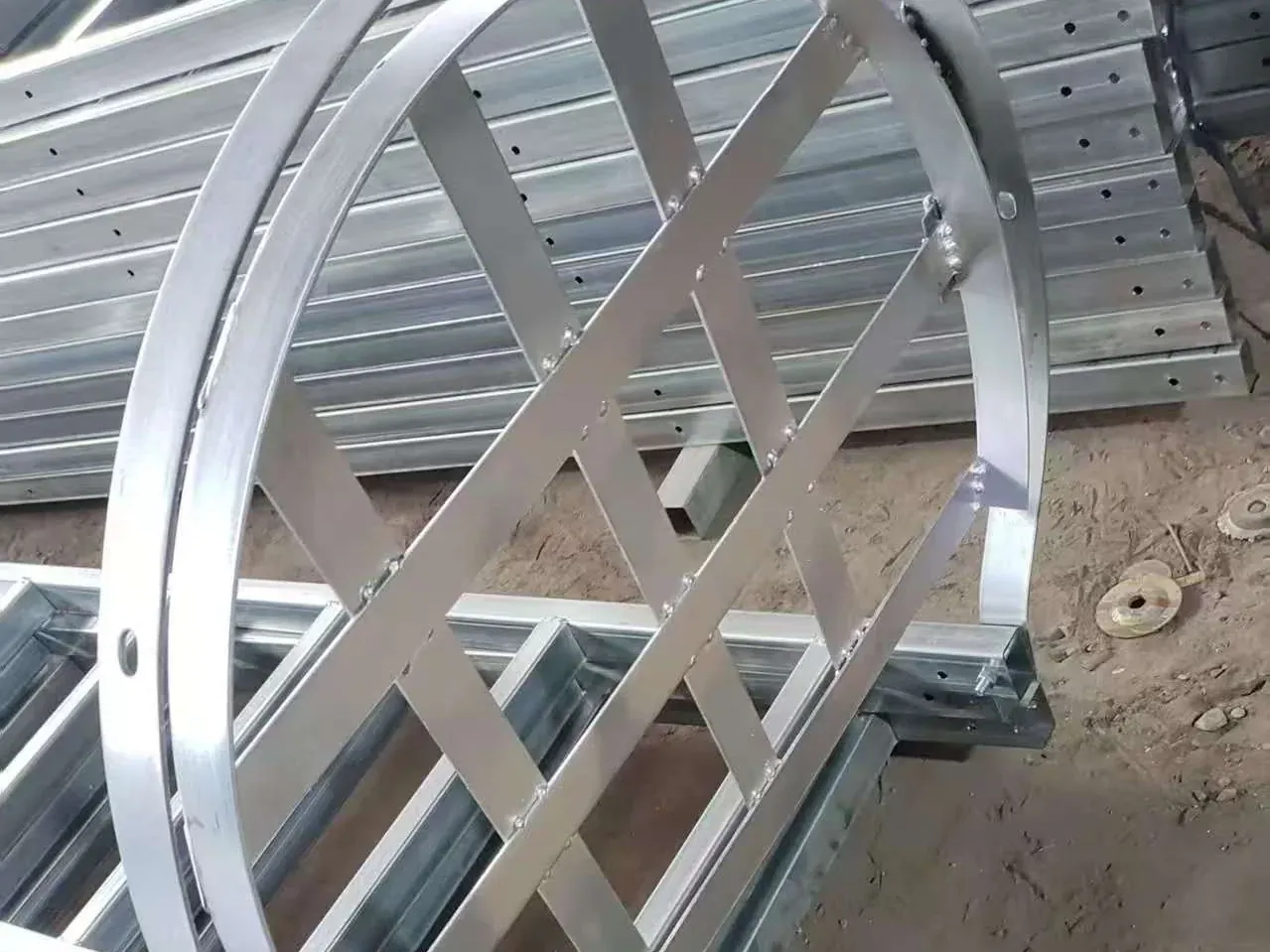
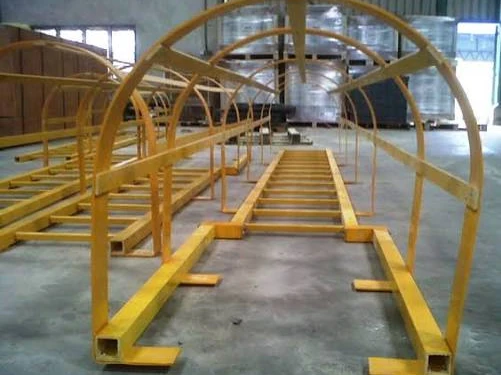
| Workshop Area | 3,000 m² standardized production workshop in Shijiazhuang, Hebei, China. Purpose-built for stair & ladder manufacturing with dedicated zones for cutting, welding, surface treatment, assembly, and quality control. |
|---|---|
| Workforce | 50+ skilled workers including: CNC operators, certified welders (CSWP / ISO 9606), assembly technicians, quality inspectors, and in-house design engineers. Average 8+ years industry experience. |
| Production Capacity | 3 dedicated production lines with daily output exceeding 240 meters of caged ladder (≈8–10 full systems per day). Annual capacity: 60,000+ linear meters of fixed ladders. |
| Certifications | • ISO 9001:2015 quality management system • CE marking for construction products • SGS / TÜV / BV third-party inspection available • Material mill certificates per EN 10204 3.1 |
| Engineering & Design | In-house engineering team designs per customer drawings and regional standards: GB 4053 (China), OSHA 1910.27 (US), EN ISO 14122 (EU), AS/NZS 1657 (Australia). All designs include structural calculations and fabrication drawings. |
| Product Range | • Fixed vertical ladders (plain / caged / with platforms) • Materials: carbon steel, hot-dip galvanized, stainless steel, aluminum, FRP • Custom heights: 2m to 30m+ • Accessories: rest platforms, safety gates, fall arrest systems |
| Export Experience | 10+ years export experience serving clients in 30+ countries across Europe, North America, Southeast Asia, Middle East, and Australia. Familiar with Incoterms, shipping documentation, and local code compliance. |
| Delivery & Installation | • Knock-down packaging for container shipping • Dedicated-vehicle domestic delivery • Professional installation team available (China & overseas) • Remote-guided installation via video call for DIY clients |
| Quality Control | • Incoming material inspection (steel grade, dimensions) • In-process weld inspection (visual + dimensional) • Coating thickness testing (powder coat / galvanizing) • Final load test on every rung + side rail • Pre-shipment inspection with photo/video report |
From FRP Profile to Finished Ladder — Our Process
Every FRP caged ladder is made and tested in our workshop under one roof, from pultruded profile to finished units.
- Cutting
FRP profiles cut to drawing — rails, rungs and hoops.
- Fabrication
Bolted or adhesive assembly of rails, rungs and cage members.
- Surface
UV-stable, corrosion-proof — no coating required.
- Assembly
Rails, rungs, hoops and uprights assembled into the finished ladder.
- Inspection
Dimension, fitting quality and rung load tests.
- Documentation
Material certificates and load test data — SGS / TÜV / BV available.
Installation Guide
Correct anchoring is critical for a caged ladder’s safety. We provide detailed installation drawings and optional remote-guided on-site installation.
Key Installation Points
| Anchoring Type | • Wall-mounted — FRP or stainless steel brackets, bolted to side rails • Tank / vessel-mounted — curved brackets to follow vessel radius • Substation / equipment-mounted — non-conductive FRP supports • Freestanding — base plate with anchor bolts, for ground-level installations |
|---|---|
| Bracket Spacing | Standard 1.5m vertical spacing (every other rung). Brackets in FRP or stainless steel to match the corrosion-proof system. |
| Cage Start Height | Safety cage begins 2.1–2.4m (7–8ft) above ground / lower landing. This prevents unauthorized climbing while allowing safe access from the ground. The bottom 2.1m of side rails are visible and unprotected — standard per OSHA / EN. |
| Rest Platforms | Above 9m (30ft) total climb, add an intermediate rest platform every 6m (20ft). FRP platform with guardrails and a hatch or gate for safe passage through the cage. |
| Top Extension | Side rails extend 1.1m (42") above the upper landing / roof level as handrail. Provides a secure handhold when stepping onto the platform, with a safety gate at the top opening. |
| Anchor Design | Custom engineered for your wall base material: concrete, steel, masonry, or specialty substrates. FRP keeps the system non-conductive around live equipment. All anchor designs include pull-out load calculations, supplied in our detailed installation drawings with bolt sizes and embed depths. |
| Clearance Requirements | • Minimum 150mm clearance from wall to back of rung • Minimum 650mm clear width inside the cage • 700mm headroom above each rest platform • Keep 1m clearance around ladder base at ground level |
| Delivery & Installation | • Knock-down / modular packaging for easy transport through doorways • Dedicated-vehicle delivery to site (FTL or LTL) • Professional installation team available (China & overseas) • Optional remote-guided installation via video call |
| Testing & Certification | • Factory rung load test on every unit • Material certificates supplied • FRP pultrusion quality inspection • OSHA / EN ISO 14122 compliance documentation included |
Maintenance Guide for Long Service Life
FRP caged ladders are maintenance-free by design, but a simple routine keeps them safe and extends their life.
Routine Inspection
Check rung fixings, cage connections and surface condition regularly.
Cleaning
Wash with water to remove chemical residue and salt in aggressive environments.
Load Limits
Do not overload — single-rung load 1.3–1.5kN; keep within rated capacity.
Regulatory Note
OSHA 1910.28: new ladders >24ft require a fall-arrest system (by 2036 all existing ladders). Confirm per your region.
Engineered to Your Regional Ladder Standard
Every FRP caged ladder is designed to the official fixed-ladder standard of your destination market, so cage geometry, dimensions and fall protection are built in — not guessed.
Cages for existing fixed ladders over 6.1m (20ft); new ladders over 7.3m (24ft) require a ladder safety system (LSS) or personal fall arrest. LSS mandatory on new ladders; cages phased out for new installs.
Cage mandatory for fixed ladders over 3m; single section ≤6m with rest platforms above; rung load 1.5kN. Cage diameter 650–800mm, hoops ≤1500mm.
Hooped / birdcage ladders; cage from 3m, incorporated with EN ISO 14122-4.
Fixed ladders with hoops; cage recommended above 6m; mid-way rest platforms mandatory on long climbs; rung load rated by assessment.
Steel ladders & safety cage per 15J401 atlas; roof access ladders caged from 7m; WT2 up to 10m, WT3 above 10m with platforms (6m spacing).
FRP pultrusion to ANSI/NAAMM and related standards; non-conductive and corrosion-resistant by design for your market.
FRP Caged Ladder FAQ
Answers to the questions buyers ask most.
When does a ladder need a safety cage?
Guidance varies by standard: EN ISO 14122-4 requires a cage for climbs over 3m, OSHA applies cage / fall-protection rules over 6.1m (24ft), and GB 4053.1 requires a cage from 7m on roof ladders. We engineer the correct cage per your destination country.
Is FRP conductive?
No. FRP (fiberglass reinforced plastic) is non-conductive, making it the safe choice for electrical and power stations where metal ladders pose a live-conductor risk.
Where should FRP ladders be used?
FRP caged ladders are best for chemical plants, electrical & power stations, water treatment and coastal environments where acids, alkalis, salts or live conductors would corrode or endanger metal ladders.
Does OSHA allow cages on ladders?
Yes — for existing fixed ladders over 24ft, cages are an accepted protection. New ladders over 24ft (per OSHA 1910.28) require a ladder safety system or personal fall arrest instead. We confirm per the code that applies to your project.
How long does an FRP caged ladder last?
With its corrosion-proof, UV-stable construction and minimal maintenance, an FRP caged ladder typically serves decades in aggressive environments where steel would corrode.
Can I get a custom-height FRP caged ladder?
Yes. Send your DWG, PDF or sketch — we design height, cage diameter, rung spacing, mounting type and platforms, and fabricate to your specification.
How to Get a Quote — What We Provide
Send us your details and we respond within 24 hours with engineering advice and a detailed quotation.
Please Provide
Height & Type
Working height and which type (plain / caged / +handrail / +platform).
Drawing or Sketch
DWG, PDF, CAD or a photo/sketch of the site and base material.
Destination Standard
Your country — we engineer to OSHA, EN ISO, BS, AS or GB.
Quantity & Delivery
Number of ladders, target port or delivery address.
Your Quotation Includes
| Itemized Price | Per model, per meter or per set |
|---|---|
| Dimensions | Height, cage diameter, rung spacing, platform sizes |
| Weight | Net weight per ladder (kg) |
| Surface Area | Profile surface area for reference |
| Materials | Specified rails, rungs, hoops, brackets and fixings |
| Standards | Applied standard and compliance notes |
| Delivery | FOB / EXW / CIF options, lead time and shipping |
| Certificates | Material and load-test documents (SGS / TÜV / BV optional) |
Request a Quote
Fill in the details below and we will reply within 24 hours with engineering advice and a detailed quotation.
FRP Caged Ladder — Common Questions
What is FRP and why use it?
FRP (Fiberglass Reinforced Plastic) is a composite material made of glass fibers embedded in resin. It is non-conductive, corrosion-proof against acids and alkalis, and lightweight — perfect for chemical plants, power stations and explosive environments.
Is FRP as strong as steel?
FRP has excellent strength-to-weight ratio. It is lighter than aluminum but can be engineered to meet the same load requirements as steel ladders. We use pultruded profiles for consistent strength.
Does FRP need maintenance?
Almost none. FRP does not rust, corrode or need painting. Just clean with water if needed. It is ideal for harsh environments where steel ladders would need frequent maintenance.
Get an FRP Caged Ladder Quote
Send your drawing or dimensions — we respond within 24 hours with engineering advice and a factory price.
Request a QuoteTel: +86 152 2651 7938 · Email: 289810621@qq.com · Mon–Sat 08:30–18:00 (GMT+8)